

Introduction
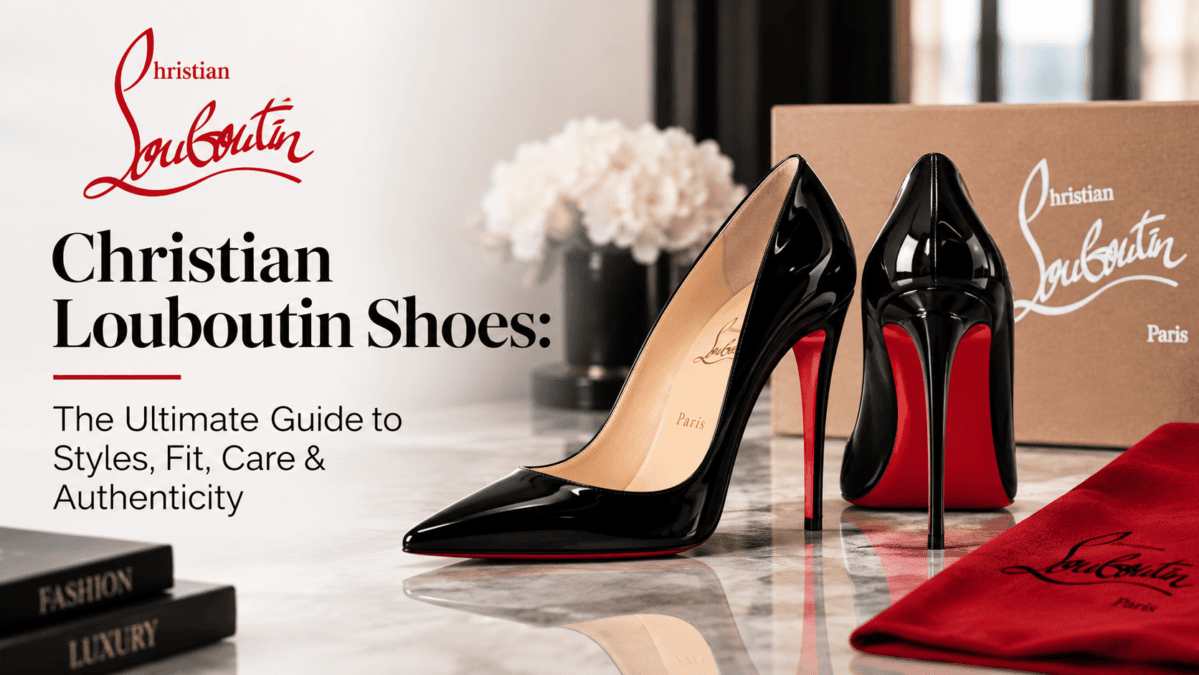
Christian Louboutin shoes are among the most recognizable luxury footwear in the world, defined by their lacquered red soles, vertiginous heels, and couture craftsmanship. Whether you are eyeing a first pair of Pigalle pumps, considering pre-owned So Kates, or simply want to understand why these shoes command four-figure prices, the answer comes down to three things: the construction, the fit, and the way the red sole is made. This guide covers the full picture — from brand history and model-by-model sizing to authentication, care costs, and what is happening at the Maison in 2026 — so you can buy with confidence rather than guesswork.
Key Facts at a Glance
| Detail | Information |
|---|---|
| Founder | Christian Louboutin, Paris |
| First boutique | 1991, Galerie Vérot-Dodat, Paris |
| Red sole introduced | 1992, using a bottle of red nail polish |
| Signature material | Leather sole with red lacquer |
| Production | Primarily made in Italy |
| Sizing system | European (fractional half sizes, e.g., “37 1/2”) |
| Typical heel heights | 70 mm to 120 mm |
| 2026 classic price range | Approximately $700–$1,500+ (≈4,800–6,800 CNY for core pumps) |
| Men’s creative director | Jaden Smith (appointed September 2025) |
The History and Signature of Christian Louboutin Shoes
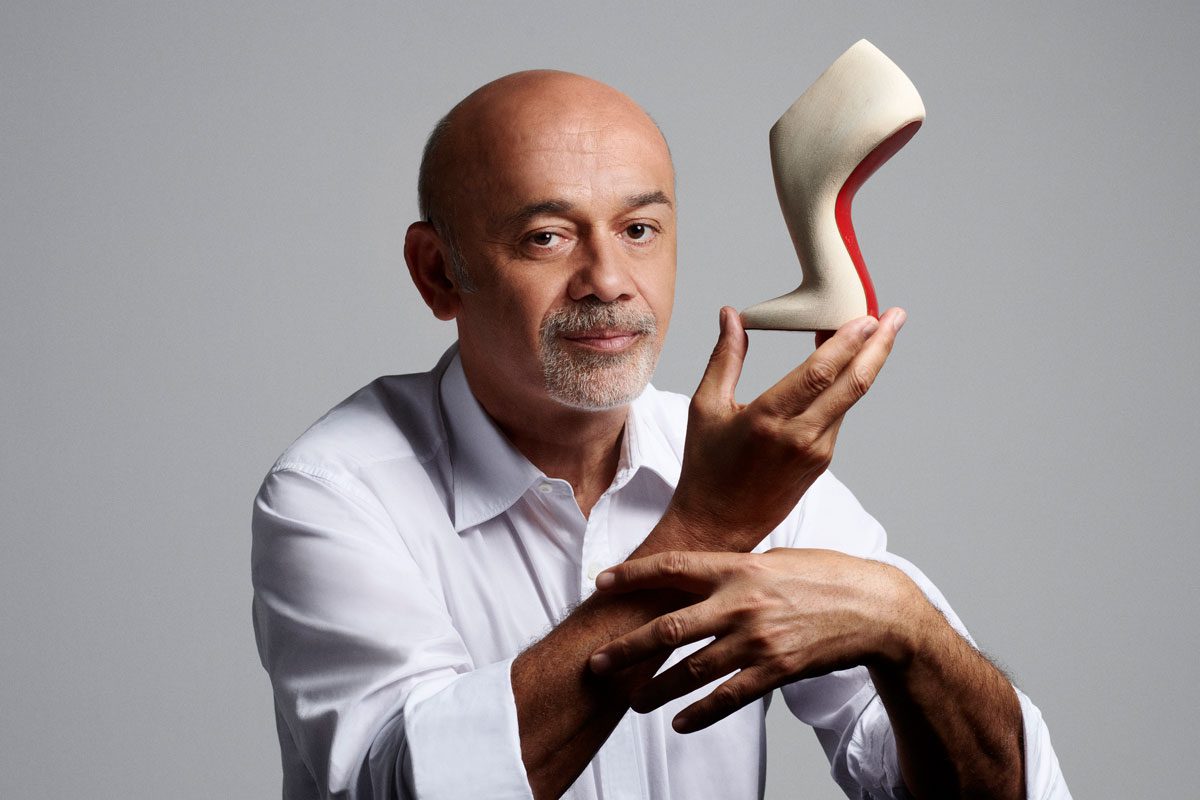
Christian Louboutin opened his first boutique in Paris in 1991 after working with Chanel and Yves Saint Laurent. The following year, he painted the soles of a prototype shoe with a bottle of red nail polish, creating the signature red sole that would become the House’s most defining mark. The brand expanded to New York in 1993, and red-soled shoes quickly became red-carpet fixtures.
The red sole is more than branding. It is applied as a lacquer over a classic European beige leather sole, and it is intentionally fragile — the red wears away with use, revealing the natural leather underneath. Louboutin has gone to court to protect the red sole as a trademark, underscoring how central it is to the identity of the shoes.
Timeline of Key Brand Milestones
| Year | Milestone |
|---|---|
| 1991 | First Christian Louboutin boutique opens in Paris |
| 1992 | Red sole created with red nail polish |
| 1993 | Expansion to New York; red soles become red-carpet icons |
| 2003 | First handbag launched |
| 2009–2010 | Men’s collection introduced |
| 2013 | Nude shoe collection reimagined across a range of skin tones |
| 2014 | Christian Louboutin Beauty launches |
| 2025 | Jaden Smith appointed first men’s creative director |
| 2026 | 2027 Spring/Summer womenswear show, “Eternal Youth,” presented in Paris |
Iconic Christian Louboutin Shoe Styles
The brand’s most searched styles sit across a spectrum of heel heights and lasts. The names matter because fit changes dramatically from one model to the next — a So Kate and a Simple Pump share a red sole but are built on completely different foundations.
The Core Pump Family
The Pigalle is one of Louboutin’s most enduring silhouettes, defined by a sharply pointed toe and a steep heel pitch. It is cut on a narrow last, and most people need to go up at least half an EU size. The So Kate (120 mm) is the most extreme expression of the pointed pump — a fine toe box, a steep 120 mm pitch, and a narrow last that pushes the foot forward into the tightest part of the shoe.
The Kate family (70 mm, 85 mm, and 100 mm) uses a rounder toe and a gentler pitch, making it closer to true to size and considerably more forgiving. The Iriza, an open-sided d’Orsay style, holds the foot differently again and should not be sized by assumptions carried over from closed pumps.
Sneakers and Men’s Styles
Louboutin’s sneaker line — including the Louis family, the Louis Orlato, and the newer Bsktball 1 Retro — carries the red sole into a more casual silhouette. Men’s creative director Jaden Smith has been reshaping the men’s division since September 2025, overseeing four annual collections across shoes, leather goods, and accessories.
Style-by-Style Fit and Use Guide
| Style | Heel Height | Fit Tendency | Best Use | 2026 Indicative Price |
|---|---|---|---|---|
| Pigalle 85 | 85 mm | Runs narrow; consider +0.5 EU | Commuting, dinners | ≈4,800 CNY |
| Iriza 100 | 100 mm | Open-sided; try before buying | Social events, dates | ≈5,200 CNY |
| Kate 100 | 100 mm | Closer to true to size | Red carpet, photos | ≈5,800 CNY |
| So Kate 120 | 120 mm | Narrow; most need +0.5 EU or more | Short appearances, collecting | ≈6,800 CNY |
Indicative prices reflect 2026 core pump pricing; sneakers and boots generally range from roughly $850 to $2,500 depending on style and material.
Christian Louboutin Sizing: The Honest Guide

The single most misleading piece of advice about Christian Louboutin shoes is “just size up half a size.” Sizing is model-dependent, and the number stamped inside the shoe is the only reliable reference point.
Louboutin shoes are made to EU sizing, and conversion charts disagree with each other by half sizes. A UK or US figure typed into a resale listing is a guess; the EU stamp is the fact. The brand itself states that shoes generally run true to size but that individual fit varies by wearer and style.
What to Expect by Category
- So Kate 120 and Pigalle: Narrow, pointed lasts. Most wearers need at least half an EU size up, and sizing up does not necessarily add width across the toe box.
- Kate 70/85/100 and Simple Pump: Rounder toe, lower pitch. Many people wear their normal EU size comfortably.
- Sneakers: Often described as running small and narrow; a half-size to full-size increase is commonly recommended, though styles vary.
Practical rule: If you cannot try the shoe in person, buy based on the EU size and the specific model’s reputation, not on a converted UK or US size. For high-value purchases, a boutique fitting remains the most reliable option.
How to Authenticate Christian Louboutin Shoes
Authentication rests on construction details that replicas consistently fail to reproduce. The brand’s own policy is that authenticity depends on multiple factors and requires in-person inspection for official determination, but several observable red flags can help before you buy.
The Red Sole
Authentic soles are genuine leather topped with bright red lacquer, with an almost mirror-like shine. Replicas frequently use colored plastic or rubber, which looks matte or carries a plastic shine. Because the authentic lacquer is fragile, it begins to wear on asphalt. A pre-owned pair whose sole is still perfectly smooth after real wear is more likely to be a plastic replica than a miraculously durable original.
Markings and Sizing
The logo on the sole should be embossed into the leather, not merely printed on top, with a clear, thin font. Main-collection Louboutin shoes are primarily produced in Italy; “Made in France” on a main-collection pair is a warning sign. Originals use fractional half sizes — “37 1/2,” not “37.5” — and decimal sizing is a classic replica error.
Materials and Packaging
Genuine shoes smell of high-quality leather; a strong chemical glue or rubber odor is a red flag. The dust bag should be dense, high-quality red cotton with crisp black logo printing, not a slippery synthetic bag with a shifted color.
Authentication Checklist
| Check | Authentic | Replica Warning Sign |
|---|---|---|
| Sole material | Leather with red lacquer | Plastic or rubber with matte/plastic shine |
| Logo | Embossed into leather | Printed on surface |
| Size format | Fractional, e.g., “37 1/2” | Decimal, e.g., “37.5” |
| Origin | Typically “Made in Italy” | “Made in France” on main collection |
| Smell | Leather | Chemical glue or rubber |
| Dust bag | Dense red cotton, crisp logo | Synthetic, slippery, off-color |
Caring for the Red Sole: What Wear Is Normal and What It Costs
The red sole is designed to wear. Christian Louboutin states clearly that the lacquer wearing off is not a defect and is expected with use; the soles can be repainted in the signature red by specialist cobblers. The brand recommends trying shoes on a clean carpeted surface and avoiding abrasive surfaces, and it points owners toward experienced repair specialists rather than offering in-house resoling.
Typical Repair and Protection Costs
| Service | Typical Cost | Why It Matters |
|---|---|---|
| Protective red rubber sole | $75–$115 | Preserves the original leather sole and extends shoe life |
| Full leather resole with red finish | $150–$250 | Necessary once the original sole is heavily worn |
| Heel tip replacement | $25–$50 | The most common and affordable fix |
| Heel cap repair | $40–$80 | Addresses damage before it reaches the heel structure |
| Cleaning and conditioning | $40–$75 | Maintains leather, suede, or patent uppers |
Adding a protective sole immediately after purchase is the single most cost-effective step: it prevents damage and avoids higher resoling costs later. For general storage, keep shoes away from light and heat, protect leather from rain and humidity, and use the provided dust bag.
What Is Happening at Christian Louboutin in 2026
The most significant creative development at the Maison is the elevation of Jaden Smith as the brand’s first men’s creative director, a role he assumed in September 2025. Smith oversees four annual collections across men’s shoes, leather goods, and accessories, and he has described his ambition to push the men’s division “as far as possible,” with a focus on playfulness, community, and what the brand calls “red-bottom behavior”.
On the womenswear side, the Spring/Summer 2027 collection, titled “Eternal Youth: A Fairy Tale About Self-Empowerment,” was presented during Paris Fashion Week, with guests including Cynthia Erivo, Daphne Guinness, and Kelsea Ballerini. The collection’s framing around self-empowerment and reinvention signals that the House is continuing to position the red sole as a symbol of confidence rather than simply a status object.
Expert Insights: How to Buy Christian Louboutin Shoes Wisely
Match the heel to the real use case. The comfort divide in Louboutin shoes is primarily about heel height, not brand hype. An 85 mm Pigalle is a realistic evening and commuting shoe for many wearers; a 100 mm Kate is best treated as a seated-event shoe; a 120 mm So Kate is a performance shoe in the literal sense.
Do not treat sizing as a universal rule. The same EU size can feel different across the Pigalle, Kate, Iriza, and Simple Pump. If you are buying online or pre-owned, identify the exact model first, then apply model-specific sizing guidance.
Protect the sole before the first wear. The red lacquer is fragile by design. A protective rubber sole installed early preserves both the look and the resale value of the shoe.
For pre-owned purchases, authenticate before you polish. Wear on the red sole is normal, but authentication markers — sole material, embossing, fractional sizing, and origin — should be verified before any restoration work obscures them.
Read More: Monokini Swimwear Guide: Styles, Fit & 2026 Trends
Frequently Asked Questions
Do Christian Louboutin shoes run true to size?
Not consistently. Pointed styles such as the So Kate and Pigalle run narrow and typically require going up half an EU size or more, while the Kate family and Simple Pump sit closer to true to size. The EU size stamped inside the shoe is the reliable reference.
Why do the red soles wear off so quickly?
The red sole is a lacquer applied over a leather sole and is intentionally fragile. Christian Louboutin states that the red wearing off is expected with use and is not a defect. The soles can be repainted or protected with a red rubber sole.
How can I tell if Christian Louboutin shoes are fake?
Check the sole material and finish, the embossed logo, the fractional size format (“37 1/2,” not “37.5”), the country of origin, and the smell of the leather. Replicas commonly use plastic or rubber soles with a printed logo and decimal sizing.
How much does it cost to protect or repair a Louboutin sole?
A protective red rubber sole typically costs $75–$115, while a full leather resole with a red finish runs $150–$250. Heel tip replacement is usually $25–$50.
Are Christian Louboutin sneakers worth buying?
Sneakers carry the same red-sole identity in a more wearable silhouette, and the men’s line is currently being reshaped under Jaden Smith. They are generally more practical for daily wear than 100 mm or 120 mm pumps, but sizing still varies by model and many sneaker styles run narrow.
Where are Christian Louboutin shoes made?
Main-collection shoes are primarily produced in Italy. “Made in France” on a main-collection pair is a warning sign in authentication checks.
Conclusion
Christian Louboutin shoes are not a single product with a single fit. The red sole is the constant, but the Pigalle, So Kate, Kate, Iriza, and the sneaker line each demand their own sizing logic, care plan, and use case. Buy for the silhouette you will actually wear, verify the EU size and model-specific fit, protect the lacquer before the first pavement step, and authenticate carefully if you buy pre-owned. Treated that way, a pair of Christian Louboutin shoes is not just a recognizable luxury purchase — it is a well-understood one.