
Introduction
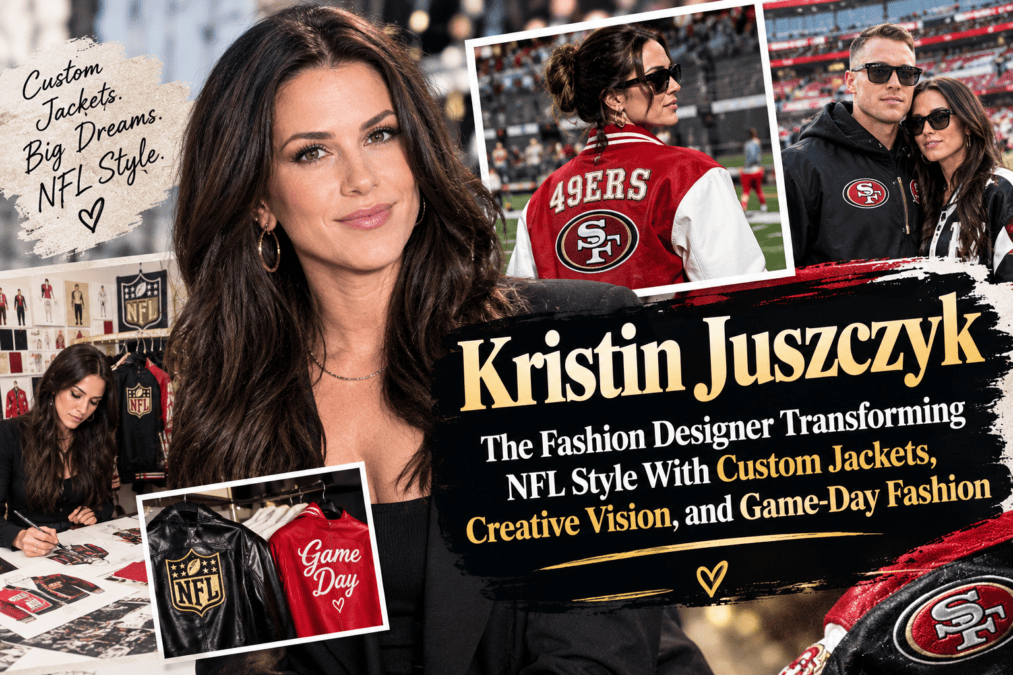
Fashion and sports have long influenced each other, but few designers have made that connection as visible as Kristin Juszczyk. Known for transforming football jerseys and team merchandise into statement-making outerwear, she has helped bring a fresh perspective to game-day dressing. Her designs demonstrate how a fan’s loyalty can become a personal style statement rather than simply a jersey worn in the stands.
The growing interest in Kristin Juszczyk reflects a wider shift in fashion. Fans increasingly want clothing that feels individual, creative, and wearable beyond a stadium. By combining sports-inspired materials, tailored silhouettes, and recognizable team aesthetics, she has helped make custom NFL fashion part of the broader conversation around celebrity style, streetwear, and women-led design businesses.
Her story is particularly interesting because it brings together several worlds: a personal interest in fashion, a connection to professional football, hands-on garment customization, and the power of high-profile visibility. Understanding her career means looking beyond viral outfits to examine the design choices, business opportunities, and cultural changes behind this emerging fashion niche.
Who Is Kristin Juszczyk?

Kristin Juszczyk is an American fashion designer and entrepreneur recognized for creating customized clothing inspired by professional football teams and sports culture. She became widely known for reworking traditional NFL apparel into distinctive jackets and other statement pieces that combine fan identity with contemporary fashion.
Her work stands apart from ordinary licensed merchandise because it emphasizes construction, styling, and individuality. Instead of relying on a standard team jersey, a custom garment can incorporate different fabrics, panels, graphics, and silhouettes to create something that looks closer to designer streetwear. This approach makes football-inspired fashion appealing to people who want to express their team allegiance without sacrificing their personal style.
She is also widely recognized through her marriage to Kyle Juszczyk, the NFL fullback who has played for the San Francisco 49ers. That connection placed her near the center of professional football culture, but her fashion identity developed through her own creative work. Her public profile illustrates how a personal interest can become a recognizable niche when skill, timing, and visibility come together.
How Kristin Juszczyk Built Her Fashion Identity

The appeal of Kristin Juszczyk’s work comes from treating sports apparel as a starting point rather than a finished product. Conventional jerseys are designed for easy recognition, comfort, and mass production. Custom outerwear introduces another layer of creativity by changing the shape, proportions, materials, and overall presentation of familiar team apparel.
This design philosophy fits into a larger movement toward personalization. Consumers increasingly appreciate clothing that feels distinctive, especially when it represents a personal interest or meaningful experience. A football-inspired jacket, for example, can serve as both a display of team loyalty and a versatile piece of streetwear when paired with denim, boots, or understated accessories.
Her rise also highlights the importance of practical design skills. A striking garment must do more than look interesting in a photograph: its panels need to work together, its proportions must suit the intended wearer, and its materials must support comfortable movement. Those details separate thoughtful garment construction from a simple decorative alteration.
The Custom NFL Jackets That Brought Her Into the Spotlight
Custom NFL jackets are central to the public recognition of Kristin Juszczyk. These designs take familiar sports imagery and reinterpret it through a fashion-focused lens, often using bold shapes, layered construction, and team-related visual details. The result is outerwear that can stand out at a stadium, a watch party, or a celebrity event.
One reason these garments attract attention is their balance between recognition and originality. Team colors and logos communicate immediate meaning, while unusual cuts and carefully arranged panels create visual interest. This combination makes a jacket more memorable than standard fan merchandise, particularly when photographed and shared on social media.
High-profile appearances have helped introduce this design approach to wider audiences. In January 2024, Taylor Swift was photographed wearing a custom Kansas City Chiefs puffer-style jacket associated with the designer during the NFL playoffs. The moment brought considerable attention to fashion-forward team apparel and demonstrated how a single recognizable outfit can help a niche design category reach mainstream audiences.
The larger lesson is that successful sports fashion often depends on context. A team jacket becomes more than merchandise when it connects an important game, a recognizable personality, and a distinctive design. That combination can create cultural relevance well beyond the stadium.
What Makes Her Designs Different From Traditional Sportswear?

The defining feature of this design approach is the transformation of familiar sportswear into clothing with a stronger fashion identity. Traditional fan apparel prioritizes team branding, durability, and accessibility. A customized jacket adds another dimension through silhouette, material selection, proportion, and construction. It can feel more like a carefully styled wardrobe piece than something purchased solely for a football game.
The distinction is especially important in women’s sports fashion, where shoppers have often had fewer choices beyond standard jerseys, T-shirts, and oversized team merchandise. Fashion-forward designs offer alternatives that can be layered over everyday outfits and styled for different occasions. This does not mean every customized piece is automatically better; craftsmanship, fit, comfort, and material quality still determine its practical value.
For aspiring designers, the approach offers a useful lesson: innovation does not always require inventing a completely new product. Sometimes, the strongest idea comes from reconsidering an existing item and identifying what customers wish it could be.
The Role of Celebrity Culture and Social Media
Celebrity fashion can dramatically influence which products and aesthetics attract public attention. When a recognizable personality wears an unusual outfit, photographs circulate across social platforms, entertainment publications, and fashion communities. A garment that might otherwise appeal to a relatively small audience can quickly become a subject of widespread discussion.
The attention surrounding football-inspired jackets demonstrates how sports, entertainment, and fashion increasingly overlap. NFL games provide a visible setting for personal style, while social media gives designers opportunities to reach audiences beyond traditional fashion publications. Images of distinctive outfits can introduce new consumers to a designer’s work without requiring them to attend a fashion show or visit a specialist retailer.
However, visibility and long-term business success are not the same thing. A viral moment may generate interest, but a sustainable fashion business also needs consistent quality, recognizable branding, reliable production, and a clear understanding of its customers. The challenge is converting attention into a lasting reputation rather than relying on one widely shared photograph.
Fashion Business Lessons for Aspiring Designers
The career provides a useful example for anyone interested in turning a creative skill into a small business. A designer can begin by identifying a specific audience, developing a recognizable visual style, and producing work that solves a genuine problem. In this case, the opportunity lies in giving sports fans more expressive alternatives to conventional merchandise.
A practical starting point for an emerging designer is to specialize rather than attempt to serve every fashion category. Someone skilled in upcycling, for instance, might focus on transforming secondhand sportswear into jackets, bags, or accessories. A distinctive niche makes it easier to develop a portfolio, communicate a brand identity, and attract customers who appreciate the particular style.
There are challenges, too. Custom garments can require substantial labor, specialized sewing skills, careful sizing, and access to suitable materials. Designers working with team logos must also understand licensing and intellectual property rules. Selling customized goods commercially can raise trademark questions, so permission and applicable legal requirements should be considered before launching a product line.
The central business lesson is straightforward: creative talent becomes more commercially valuable when it is supported by thoughtful pricing, production planning, customer service, and a clear understanding of legal responsibilities.
Quick Facts and Career Overview
The following table summarizes the main public-facing aspects of her fashion profile.
| Category | Details |
|---|---|
| Profession | Fashion designer and entrepreneur |
| Primary design niche | Customized, football-inspired outerwear |
| Associated sports league | National Football League (NFL) |
| Family connection | Married to NFL player Kyle Juszczyk |
| Notable fashion moment | Custom Kansas City Chiefs-inspired outerwear worn by Taylor Swift in January 2024 |
| Main design themes | Personalization, sports culture, streetwear, and creative garment construction |
| Broader influence | Greater visibility for fashion-led football merchandise |
These details help explain why her work attracts attention from both sports fans and fashion audiences. Her public profile sits at the intersection of professional football, celebrity culture, and personalized clothing, making her a relevant figure in conversations about contemporary game-day fashion.
How to Style Football-Inspired Fashion
Casual game-day outfit pairing a statement sports jacket with denim and sneakers
Football-inspired outerwear works best when the rest of an outfit supports rather than competes with it. An oversized statement jacket can be paired with straight-leg jeans, a simple top, and sneakers for a relaxed look. If the jacket has bold patches, multiple colors, or prominent team graphics, neutral pieces can help keep the outfit balanced.
For a more polished approach, structured trousers, a fitted base layer, and understated accessories can create contrast between athletic graphics and tailored clothing. Layering also matters: lighter pieces are practical for indoor watch parties, while warmer outerwear is more useful for cold-weather stadium events. Comfort and weather conditions should remain part of the styling decision.
The most versatile pieces are those that work outside football season. A well-proportioned jacket can be worn with everyday clothing, making it more useful than merchandise reserved for a single occasion. Ultimately, personal style comes from choosing pieces that suit the wearer, not simply reproducing an outfit seen online.
The Broader Impact on Sports Fashion
Sports apparel has gradually moved beyond its original function. Jerseys, varsity jackets, sneakers, and team-inspired accessories now appear in streetwear collections and everyday wardrobes. This shift reflects the way fans use clothing to communicate identity, community, and personal interests.
The growing visibility of women in sports-related fashion also matters. Women are not simply spectators purchasing whatever merchandise is available; they are consumers with diverse preferences for fit, design, functionality, and self-expression. Designers who understand those preferences can help broaden the range of products available to them.
There are limits to what any one designer can change, and wider fashion trends have many contributors. Nevertheless, the popularity of customized football outerwear illustrates how creative reinterpretation can challenge assumptions about what fan clothing should look like. It also shows how a product rooted in a particular sporting community can become relevant to a much broader fashion audience.
Read More: Lana Clarkson: The Actress, Model, and Hollywood Star Whose Life Left a Lasting Legacy
Frequently Asked Questions
Who is Kristin Juszczyk?
Kristin Juszczyk is an American fashion designer and entrepreneur known for customized NFL-inspired clothing, particularly statement jackets that reinterpret traditional team merchandise. Her work has attracted attention from sports fans and fashion audiences because it combines recognizable football imagery with contemporary styling.
What is Kristin Juszczyk famous for?
She is best known for transforming football-related apparel into distinctive outerwear. Her profile grew significantly after high-profile exposure brought attention to custom NFL fashion, including the Kansas City Chiefs-inspired jacket worn by Taylor Swift during the January 2024 playoffs.
Is Kristin Juszczyk married to an NFL player?
Yes. She is married to Kyle Juszczyk, a professional football fullback associated with the San Francisco 49ers. Their connection to the NFL provides a natural link to football culture, while her design work has established a separate creative identity.
What makes custom NFL jackets different from regular jerseys?
Custom jackets focus on garment construction and styling as well as team identity. They may feature altered silhouettes, mixed materials, layered panels, and distinctive proportions. Regular jerseys generally prioritize standardized team branding and athletic-inspired construction, whereas fashion-led jackets are designed to make a broader style statement.
Can aspiring designers create their own sports-inspired clothing brands?
Yes, but building a successful brand requires more than creative ideas. Designers need practical garment-making skills, a clear target audience, suitable materials, realistic pricing, and a plan for production and marketing. They should also understand trademark and licensing requirements before selling clothing that uses protected team logos or branding.
Why has game-day fashion become more popular?
Game-day clothing offers fans a way to express team loyalty while showcasing their personal style. Social media, celebrity appearances, and the growing overlap between sports and streetwear have increased the visibility of creative outfits. Comfortable, versatile clothing also allows fans to wear sports-inspired pieces outside stadiums and sporting events.
Conclusion
The rise of custom football-inspired fashion reflects a larger change in how people approach sports merchandise. Fans increasingly want clothing that communicates their interests while offering individuality, versatility, and thoughtful design. That demand creates opportunities for designers who can combine technical skill with a strong understanding of their audience.
Kristin Juszczyk represents this intersection of fashion and football culture. Her public recognition demonstrates how personalized outerwear can move from a specialized creative niche into mainstream fashion conversations. Her story also offers a practical lesson for emerging designers: distinctive ideas can attract attention, but craftsmanship, consistency, and business knowledge are what help turn creative work into a sustainable career.
The lasting takeaway is that sports fashion does not have to choose between team loyalty and personal expression. With thoughtful design, a familiar jersey or jacket can become something that feels individual, meaningful, and wearable well beyond game day.