

Introduction
Chloe Malle became the most closely watched figure in fashion media when she succeeded Anna Wintour as Head of Editorial Content at American Vogue in September 2025. Overnight, a career editor who had spent more than a decade working across print, digital, and audio was placed at the centre of a global style conversation. Her appointment marked the end of Wintour’s 37-year reign as editor-in-chief and the beginning of a new editorial chapter for the magazine that has long functioned as fashion’s unofficial authority.
What makes Chloe Malle worth understanding is not simply the famous surname or the famous predecessor. It is the fact that she is actively rethinking what a legacy fashion magazine can be in an era of algorithmic trends, declining print circulation, and relentless online scrutiny. From reducing the number of print issues to commissioning jewellery shoots on bodega cats, her choices reveal a deliberate attempt to make Vogue feel less like a monument and more like a living, breathing cultural voice.
Quick Facts: Who Is Chloe Malle?
| Detail | Information |
|---|---|
| Full name | Chloe Malle |
| Born | 8 November 1985, New York City |
| Parents | Candice Bergen (actress and former model) and Louis Malle (French film director) |
| Education | Brown University, BA in literary arts and comparative literature (2008) |
| Current role | Head of Editorial Content, American Vogue |
| Appointed | 2 September 2025 |
| Previous Vogue roles | Social editor (2011–2016), contributing editor, editor of Vogue.com (2023–2025) |
| Family | Married to Graham Albert; two children |
| Notable projects | Dogue, Vogue Vintage Guide, The Run-Through with Vogue podcast |
Sources: Britannica, ABC News, Vogue
From Social Editor to Editorial Chief: Chloe Malle’s Career Path
Chloe Malle did not arrive at the top of Vogue through a single dramatic leap. Her career was built inside the building, across almost every platform the brand operates on.
After graduating from Brown University, Malle began her journalism career at The New York Observer before joining Vogue in 2011 as a social editor. In that role, she covered weddings, parties, and the social fabric of New York, while also contributing across fashion, politics, homes, beauty, and health. She became a contributing editor in 2016, writing features and overseeing special projects, and returned to Vogue full-time in 2023 to run Vogue.com.
Her impact on the digital side was measurable. Under her leadership, Vogue.com traffic doubled, and she launched initiatives including Dogue, an elaborate canine cover contest, and the Vogue Vintage Guide. She also co-hosted The Run-Through with Vogue podcast, extending the brand’s voice into audio.
Career Timeline
| Year | Milestone |
|---|---|
| 2008 | Graduates from Brown University |
| 2008–2010 | Reporter at The New York Observer |
| 2011 | Joins Vogue as social editor |
| 2016 | Named contributing editor |
| 2023 | Becomes editor of Vogue.com |
| September 2025 | Named Head of Editorial Content, American Vogue |
| February 2026 | First print issue under her leadership hits newsstands |
| August 2026 | First September issue released |
| May 2026 | First Met Gala as editorial head |
The Succession: What Changed When Malle Took Over
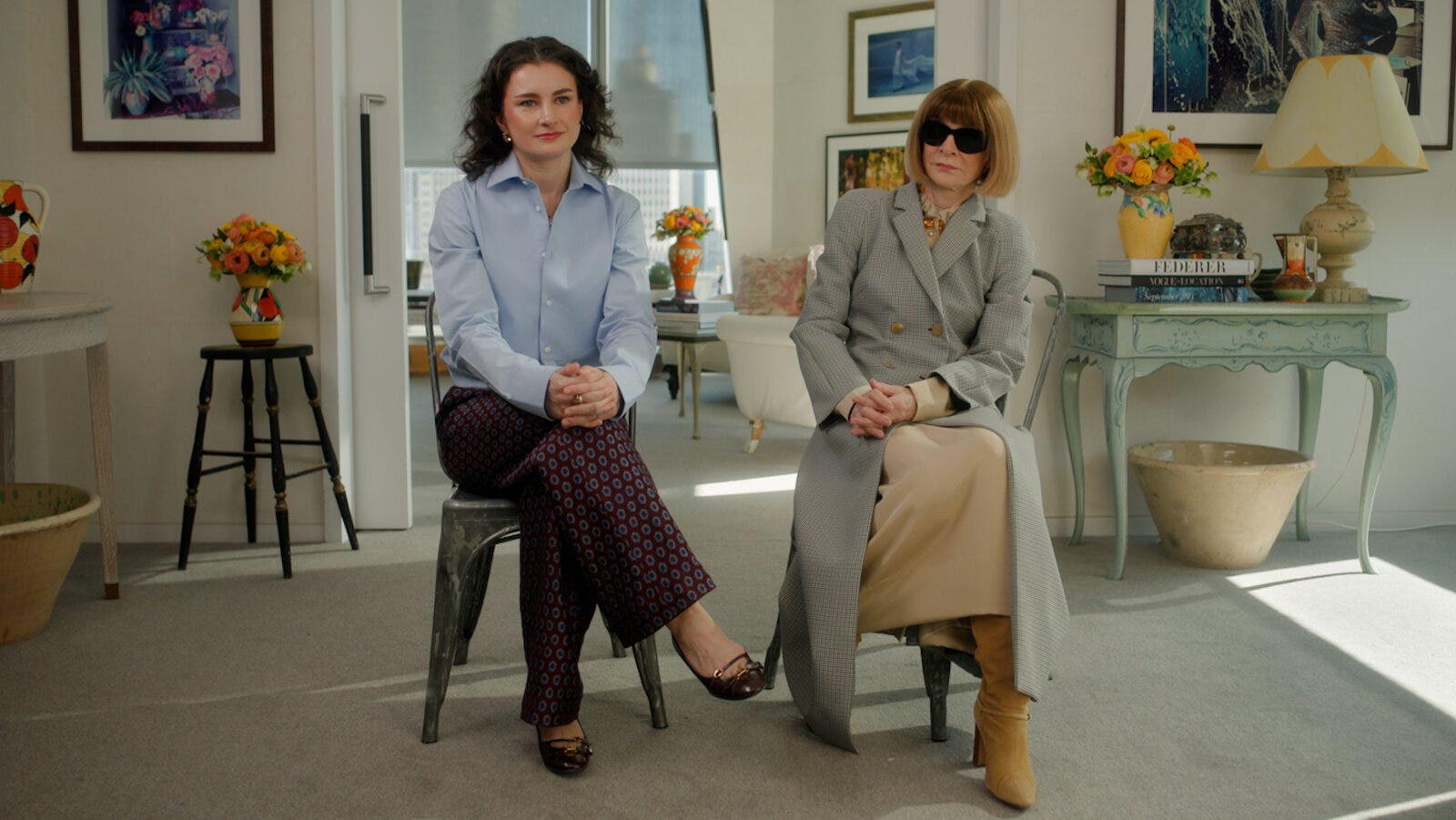
The handover from Anna Wintour to Chloe Malle was never going to be a clean break. Wintour did not retire. She remained Vogue’s global editorial director and Condé Nast’s chief content officer, still occupying her corner office and still, in practical terms, Malle’s boss. The arrangement is unusual: a successor working down the hall from the predecessor who built the magazine’s modern identity.
Malle has spoken about the dynamic with a mixture of respect and self-awareness. “I also feel incredibly fortunate to still have Anna just down the hall as my mentor,” she said in Vogue’s announcement. Wintour, for her part, framed the relationship as reciprocal: “I am so excited to continue working with her, as her mentor but also as her student”.
But the editorial direction is unmistakably Malle’s. In a joint interview with The New York Times, Wintour urged observers to “get over comparisons” and described Malle as “her own person” who would put her own stamp on the magazine.
Editorial Changes Under Chloe Malle
| Change | What It Means |
|---|---|
| Print frequency reduced | From 10 issues per year to eight, printed on thicker paper to feel more collectible |
| Teen Vogue folded into Vogue.com | The standalone Teen Vogue operation was downsized and integrated into Vogue’s website |
| Themed, moment-driven issues | Print issues are increasingly built around cultural moments rather than a rigid monthly calendar |
| Smaller, more engaged audience focus | A shift away from mass reach toward a “more direct, smaller, healthier audience” |
| Quirky, intellectual sensibility | Jewellery on bodega cats, a Wuthering Heights book club, seven dogs and a mule named Twinkie in the first print issue |
Chloe Malle’s Editorial Vision: Authority With a Sense of Humour
If there is a single idea running through Chloe Malle’s approach to Vogue, it is that fashion authority does not have to be solemn.
“It’s important to me that Vogue has a wry sense of humour about what we do,” she told Feed Me. “We are the fashion authority, but fashion is better — I believe — when not taken too seriously”. That philosophy explains some of her more unexpected editorial choices: a dog cover competition, a book club tied to a literary classic, and a first print issue that deliberately embraced the “weird dogs” rather than the usual polished celebrity formula.
At the same time, Malle has been clear that irreverence is not the same as indifference. In an NPR interview, she argued that the noise of modern media makes Vogue’s authority more important, not less. “There is a real need for an authority and an authenticity,” she said. Her summer 2026 issue, which celebrated the 250th birthday of the United States and featured only American designers for the first time in over 130 years, demonstrated that she is willing to use the magazine’s platform for ambitious, culturally weighted statements.
Chloe Malle’s Personal Style: Understated, Practical, and Deliberately Unflashy
For a figure leading the world’s most famous fashion magazine, Chloe Malle’s personal style is notably resistant to spectacle. She has described her ideal dinner outfit — the thing she would wear “if you could guarantee not a soul would care” — as “a striped sweater, High Sport pants, and Belgian loafers”. It is a wardrobe built around comfort, repetition, and a certain inherited practicality rather than runway drama.
That does not mean her style lacks intention. At fashion weeks, she has favoured tailored suits — brown pinstripe, grey check — paired with comfortable shoes for moving between appointments, and a Prada suede bag with a decorative belt. Her public appearances have included a colour-blocking Dries Van Noten silk shirt worn with blue jeans, simple gold jewellery, and minimal makeup. When she does step into more formal territory, she has chosen pieces such as a Carolina Herrera bandeau top and brocade skirt, or a hot-pink studded maxi dress that marked a departure from her usual restrained palette.
Her first Met Gala appearance as editorial head, in May 2026, crystallised the tension in how her style is received. Malle wore a marigold-orange chiffon gown by New York designer Colleen Allen, inspired by Frederic Leighton’s painting Flaming June, with Old Hollywood curls and Fred Leighton jewellery. Critics largely found it too understated for an event known for theatrical excess, and the look became a talking point about whether a Vogue editor should dress as a fashion protagonist or as a working editor.
Style Signatures at a Glance
| Element | Chloe Malle’s Approach |
|---|---|
| Tailoring | Pinstripe and checked suits, especially during fashion weeks |
| Footwear | Comfortable flats, loafers, boots built for a working schedule |
| Accessories | Simple gold jewellery, vintage earrings, Prada suede bag |
| Eveningwear | Understated gowns with narrative references rather than overt glamour |
| Beauty | Minimal makeup, natural curls or simple updos |
| Off-duty | Striped knits, tailored trousers, jeans, shirt-dresses |
The Nepo Baby Conversation and Public Scrutiny

No discussion of Chloe Malle’s position can ignore the nepotism debate. Her mother, Candice Bergen, was a successful model before becoming a five-time Emmy-winning actress, and appeared on the cover of Vogue in May 1967. Her father, Louis Malle, was an Oscar-nominated French director. When Malle was named to the top editorial role, online reaction quickly focused on her parentage.
Malle has met the conversation directly rather than deflecting it. She has called herself a “proud nepo baby” and acknowledged that her upbringing gave her advantages. “There is no question that I have 100 per cent benefited from the privilege I grew up in,” she told The New York Times. “I will say, though, that it has always made me work much harder… to prove that I’m more than Candice Bergen’s daughter”.
Her response to the scrutiny has been to emphasise craft over commentary. In a 2026 interview, she said she would rather be a “workhorse” than a “show pony”. That framing aligns with a career that, whatever its advantages, includes 14 years of continuous work inside Vogue across editorial, digital, audio, and events.
Expert Insight: What Chloe Malle’s Vogue Means for Fashion Media
Malle’s tenure is unfolding during a difficult moment for legacy publishing. Print circulation has declined sharply, web traffic across media is under pressure from AI-driven search changes, and fashion trends now spread through algorithms rather than monthly issues. Her response has been to lean into what Vogue can offer that a TikTok feed cannot: curation, authority, and a point of view.
That strategy carries risk. Reducing print frequency and narrowing the audience may alienate readers who still associate Vogue with mass accessibility. Commissioning quirkier stories may confuse an audience trained to expect celebrity covers and red-carpet coverage. But it also creates a clearer identity: a Vogue that functions less as a newsstand staple and more as a cultural tastemaker with a recognisable sensibility.
The early signals suggest that Malle is betting on taste as a differentiator. In a media environment where everyone can see everything, the value of an editor is not access to images but the judgment to decide which images matter and how to frame them. Whether that bet pays off will define not just her tenure but the broader question of whether legacy fashion magazines can remain relevant without abandoning the qualities that made them authoritative in the first place.
Read More: Candice Swanepoel Kids: A Complete Guide to Her Sons, Anacan and Ariel
Frequently Asked Questions About Chloe Malle
Who is Chloe Malle?
Chloe Malle is the Head of Editorial Content at American Vogue. She succeeded Anna Wintour in September 2025 after spending more than a decade at the magazine in roles including social editor, contributing editor, and editor of Vogue.com.
What is Chloe Malle known for at Vogue?
Chloe Malle is known for launching Dogue, Vogue’s canine cover competition, the Vogue Vintage Guide, and for doubling Vogue.com traffic during her time as digital editor. As editorial head, she has reduced print frequency, introduced themed issues, and brought a quirkier, more intellectual sensibility to the magazine’s pages.
Is Chloe Malle related to Candice Bergen?
Yes. Chloe Malle is the daughter of actress and former model Candice Bergen and the late French film director Louis Malle. She has publicly described herself as a “proud nepo baby” while emphasising that she has worked to build a career in her own right.
What is Chloe Malle’s personal style like?
Her style is understated, practical, and tailored. She favours suits at fashion weeks, comfortable shoes, simple gold jewellery, and a wardrobe built around striped knits, jeans, and loafers. Her Met Gala looks have been described as elegant but deliberately less theatrical than the event’s expectations.
How is Chloe Malle changing Vogue?
She has reduced print issues from 10 to eight per year, printed on thicker paper for a collectible feel, folded Teen Vogue into Vogue.com, and focused on themed issues and a more engaged core audience rather than mass reach. Her editorial choices favour personality, humour, and cultural specificity over generic celebrity coverage.
Does Anna Wintour still work with Chloe Malle?
Yes. Anna Wintour remains Vogue’s global editorial director and Condé Nast’s chief content officer, and Malle reports to her. Wintour has described herself as both Malle’s mentor and her student, and the two have spoken publicly about maintaining a close working relationship.
Conclusion
Chloe Malle is not trying to be Anna Wintour 2.0, and that is precisely the point. Her Vogue is smaller in print but broader in curiosity, less invested in icy perfection and more willing to put a mule named Twinkie alongside a couture shoot. She has taken the most scrutinised job in fashion media and chosen to define it through editorial judgment, a dry sense of humour, and an insistence that authority and approachability can coexist.
For readers watching the evolution of American fashion media, Chloe Malle is the figure to follow — not because of the family name or the famous predecessor, but because her decisions will shape what a fashion magazine looks like, and what it values, for the next generation.