
Introduction
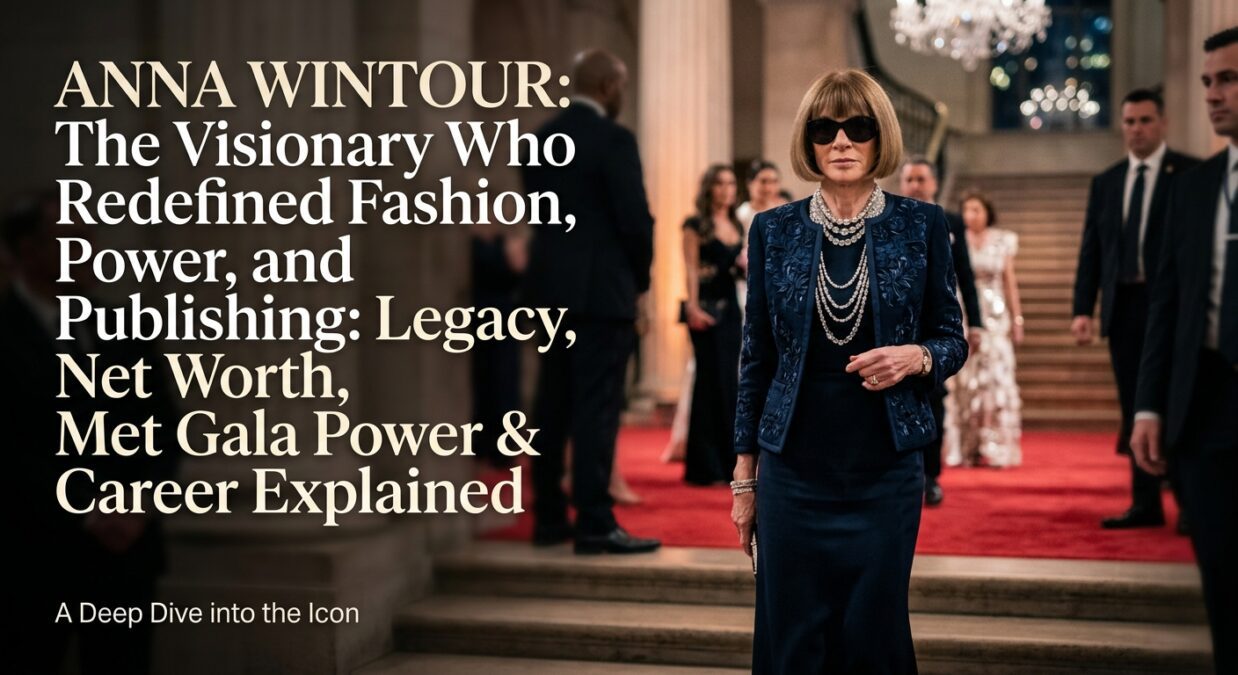
Anna Wintour is the most powerful figure in global fashion. For nearly four decades, she served as the editor-in-chief of American Vogue, transforming a respected but increasingly cautious magazine into the ultimate arbiter of taste, trend, and cultural relevance. Her signature precision-cut bob and ever-present dark sunglasses made her instantly recognisable, but it was her unyielding editorial vision and business acumen that cemented her status as a cultural force.
In June 2025, Wintour stepped down as Vogue‘s editor-in-chief after 37 years, marking the end of an era in fashion publishing. Yet she has not retired. She continues to serve as Condé Nast’s global chief content officer and Vogue‘s global editorial director, roles that grant her sweeping influence across the company’s entire portfolio, including The New Yorker, Vanity Fair, GQ, and Architectural Digest. This article explores Anna Wintour’s career trajectory, her ongoing impact on fashion and media, her financial legacy, and what her next chapter reveals about the future of publishing.
Key Facts About Anna Wintour
| Category | Details |
|---|---|
| Full Name | Dame Anna Wintour CH DBE |
| Born | 3 November 1949, London, England |
| Citizenship | United Kingdom and United States |
| Current Roles | Global Chief Content Officer, Condé Nast; Global Editorial Director, Vogue; Artistic Director, Condé Nast |
| Former Role | Editor-in-Chief, American Vogue (1988–2025) |
| Estimated Net Worth | $50 million (2025) |
| Reported Peak Salary | $4 million annually, plus wardrobe allowance |
| Children | Charles Shaffer (b. 1985), Katherine “Bee” Shaffer (b. 1987) |
| Key Honour | Companion of Honour (2025); Dame Commander of the Order of the British Empire (2017) |
| Met Gala Role | Lead Chairperson since the 1990s |
Sources: Wikipedia, The Mirror, Britannica, Bernama
The Anna Wintour Career Timeline: From London to Global Fashion Authority
Anna Wintour’s journey to the summit of fashion publishing was neither linear nor instantaneous. It was built on a series of strategic moves, abrupt setbacks, and an unwavering commitment to her editorial instincts.
| Year | Milestone |
|---|---|
| 1949 | Born in Hampstead, London, to Charles Wintour, editor of the Evening Standard, and Eleanor Trego Baker. |
| 1970 | Begins career as a fashion assistant at Harper’s & Queen (now Harper’s Bazaar UK). |
| 1975 | Moves to New York; becomes junior fashion editor at Harper’s Bazaar, but is fired after nine months. |
| 1976 | Joins Viva magazine; later works at Savvy. |
| 1980 | Becomes fashion editor at New York magazine. |
| 1985 | Appointed editor of British Vogue. |
| 1987 | Takes over House & Garden, rebranding it with her signature vision. |
| 1988 | Appointed editor-in-chief of American Vogue. Her first cover features model Michaela Bercu in $50 jeans and a $10,000 Lacroix jacket—a defining moment for high-low fashion. |
| 1992 | Breaks a century-old tradition by placing a man (Richard Gere) on the cover alongside Cindy Crawford. |
| 2013 | Named Artistic Director of Condé Nast. |
| 2017 | Made a Dame Commander of the Order of the British Empire (DBE). |
| 2020 | Promoted to Global Chief Content Officer of Condé Nast, expanding her oversight to all major titles. |
| 2025 | Steps down as editor-in-chief of American Vogue after 37 years; remains in senior Condé Nast roles. Awarded Companion of Honour. |
| 2026 | Continues leading Vogue‘s global editorial direction; announces Vogue World 2027 in San Francisco and Vogue Forces of Fashion 2027 in Sydney. |
Sources: Wikipedia, ABC News, Britannica, IMDb
The Vogue Transformation: How Anna Wintour Redefined Fashion Media

When Anna Wintour took the helm at American Vogue in 1988, the magazine was respected but cautious. She transformed it into a cultural powerhouse that could set and destroy trends with a single cover choice.
The High-Low Revolution
Wintour’s first cover in November 1988 featured model Michaela Bercu in a $10,000 Christian Lacroix jacket paired with $50 Guess jeans. This audacious mix of luxury and accessibility shattered the traditional fashion hierarchy and signalled a new era. It was not about showing aspirational clothes exclusively—it was about showing aspiration through attitude.
Breaking Barriers
In 1992, Wintour broke a century-old Vogue tradition by featuring a man—Richard Gere—on the cover alongside Cindy Crawford. This decision reflected her belief that fashion is not a women’s-only conversation; it is a cultural conversation.
The Met Gala as a Cultural Institution
Perhaps Wintour’s most visible legacy is her transformation of the Met Gala. What began as a modest fundraising dinner for the Metropolitan Museum of Art’s Costume Institute became, under her stewardship, a global spectacle where fashion, celebrity, and philanthropy intersect. She has served as the main organiser and co-chair for over 30 years, helping the Costume Institute raise $223 million. In 2014, the Met named a wing in her honour: The Anna Wintour Costume Center.
Tickets for the 2025 Met Gala cost $75,000 each, or $350,000 for a table, yet Wintour maintains tight control over the guest list. When asked whether she approves looks before the event, she told Good Morning America: “Many call and ask our advice, so we try and help some of them as best we can. Some, no idea.”
Anna Wintour’s Net Worth and Salary: The Business of Influence
Anna Wintour’s financial success is a direct reflection of her strategic value to Condé Nast. According to Celebrity Net Worth, her estimated net worth stands at $50 million as of 2025.
| Financial Metric | Details |
|---|---|
| Estimated Net Worth | $50 million (2025) |
| Reported Peak Annual Salary | $4 million (as editor-in-chief) |
| Wardrobe Allowance | Approximately $200,000 annually |
| Primary Income Sources | Condé Nast executive roles, editorial leadership |
| Notable Non-Income Role | Met Gala organiser (does not receive payment for this role) |
Sources: The Mirror, Celebrity Net Worth, El Mundo
Wintour’s compensation grew alongside her responsibilities. In 2013, she became Artistic Director of Condé Nast, and by 2020, she was promoted to Global Chief Content Officer, overseeing content that reaches more than 1 billion global readers. Her influence extends far beyond her salary—she controls access to the most coveted invitation in fashion.
What Anna Wintour Does Now: The Post-Editor-in-Chief Era
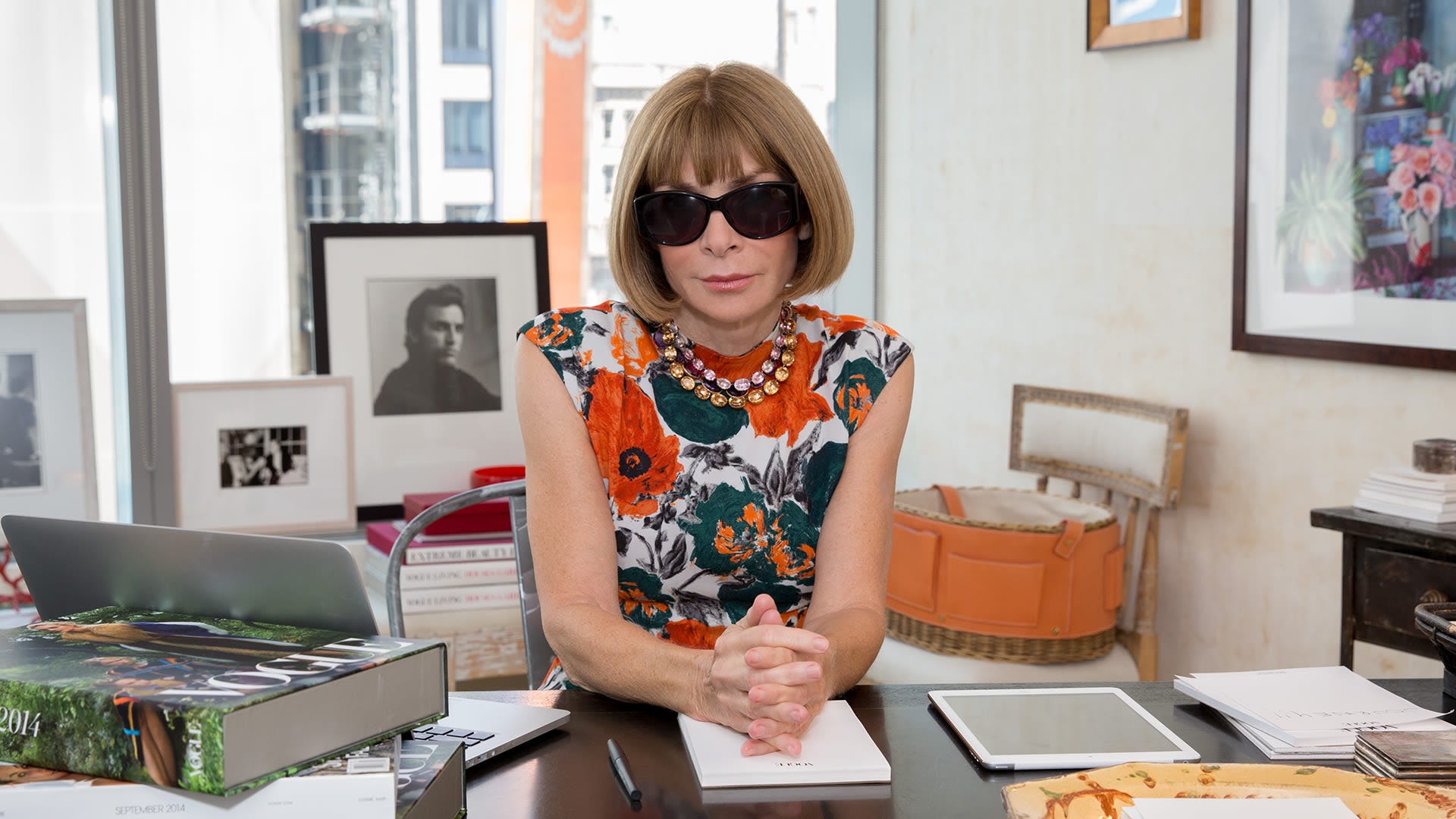
Despite stepping down from the editor-in-chief role in June 2025, Anna Wintour remains one of the most consequential figures in media. Her current responsibilities include:
Global Chief Content Officer, Condé Nast
In this role, Wintour oversees editorial content across Condé Nast’s entire portfolio. This includes The New Yorker, Vanity Fair, GQ, Wired, and Architectural Digest, among others. Her influence now extends across platforms, formats, and international editions.
Vogue’s Global Editorial Director
Wintour continues to shape Vogue‘s global editorial direction, ensuring that the magazine’s voice remains consistent and influential across all international editions. She remains the final arbiter of Vogue‘s most important covers and features.
Vogue World and Vogue Forces of Fashion
Wintour leads Vogue‘s most ambitious live events. Vogue World, the franchise that has staged spectacular fashion-meets-culture events in New York, London, Paris, and Milan, is headed to San Francisco in 2027. “Vogue believes in celebrating cities, and San Francisco is a city like none other,” Wintour said in the announcement. “We think it’s the perfect setting for Vogue World 2027.”
Additionally, Wintour will headline Vogue Forces of Fashion in Sydney in February 2027, a global conversation series she launched in New York in 2017. “There are so many influences and new ideas being expressed in fashion right now,” she said. “I’m looking forward to coming together next year, talking about all the ways fashion has been changing, innovating and moving global culture forward.”
Anna Wintour’s Continued Influence at Condé Nast: A Double-Edged Sword?
Anna Wintour’s enduring power at Condé Nast has become a subject of intense industry discussion, particularly as the company searches for a new CEO following Roger Lynch’s departure to Mattel.
According to insiders who spoke to the New York Post, Wintour is described as a “Machiavellian” figure whose approval is essential for any major decision affecting Vogue‘s business. One former Condé Nast executive told the Post: “Being compliant and pliable seems to be a requirement.” Another insider added: “No exec will be able to touch Vogue’s business without her signoff.”
This dynamic has led some to describe Condé Nast as having become “Vogue, Inc.,” with Wintour sitting at the top of the pyramid. While this concentration of influence has been central to Vogue‘s commercial success, it also presents a challenge for the company’s next CEO, who will need to navigate Wintour’s formidable presence while charting a path for Condé Nast’s broader portfolio.
The John Galliano Controversy: A Test of Wintour’s Judgment
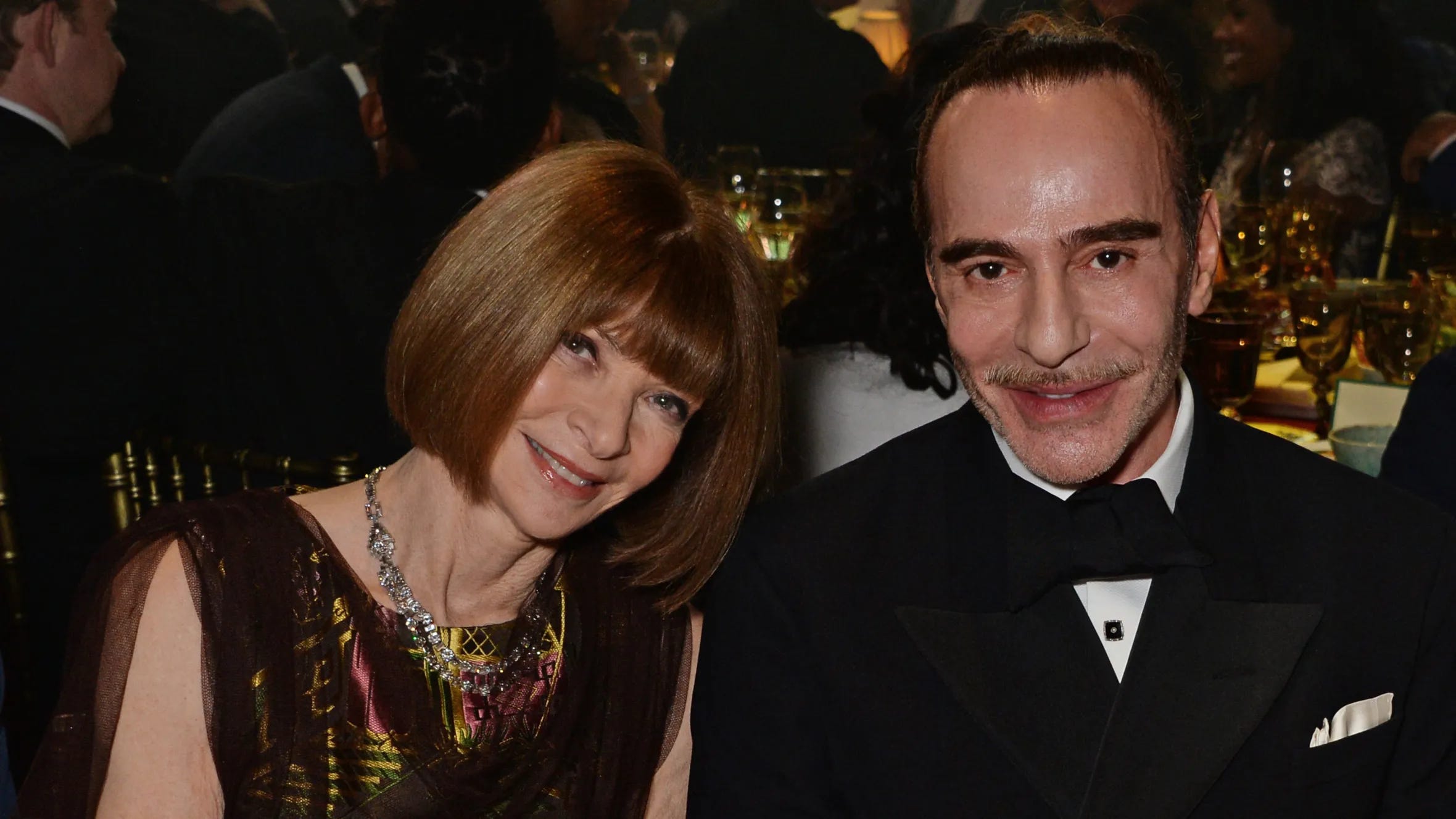
In 2026, Anna Wintour faced one of the most significant controversies of her career when she supported fashion designer John Galliano for a Met Gala exhibition. Galliano, who was convicted in 2011 of making antisemitic and racist remarks in a Paris café, was initially set to be honoured with a major exhibition at the 2027 Met Gala.
The backlash was immediate and fierce. Wintour initially stood by Galliano, calling him “courageous” and offering him full support. However, amid widespread criticism from the public and within the fashion industry, Galliano announced via Instagram that “after much reflection and discussion with all those involved,” the exhibition would not take place.
Wintour subsequently withdrew her support, but the episode raised questions about her judgment and legacy. Industry insiders suggested that she had “overplayed her hand” with the Galliano theme, and some argued that she should “take a year off” from Met Gala leadership. The controversy highlighted the delicate balance Wintour must maintain between artistic advocacy and public accountability.
Anna Wintour’s Personal Life: Family, Awards, and Recognition
Family
Anna Wintour was married to child psychiatrist David Shaffer from 1984 to 1999. They have two children: Charles Shaffer (born July 1985) and Katherine “Bee” Shaffer (born July 1987). She was later married to Shelby Bryan from 2004 to 2020.
Wintour is a grandmother to four grandchildren, who call her “Anna” rather than a traditional grandmother name. In a 2022 Vogue interview, she revealed this detail during a “73 Questions” segment. She has spoken candidly about balancing motherhood with her demanding career. In a 2026 conversation with Meryl Streep for Vogue, she admitted she was “relentless” about being present for her children and believes it is “okay to be a busy mom”.
Awards and Honours
| Award/Honour | Year | Details |
|---|---|---|
| Dame Commander of the Order of the British Empire (DBE) | 2017 | For services to fashion |
| Companion of Honour (CH) | 2025 | Awarded in the 2023 King’s Birthday Honours; presented by King Charles III at Buckingham Palace |
| Presidential Medal of Freedom | 2025 | Awarded by President Joe Biden; America’s highest civilian honour |
Sources: Bernama, BBC, IMDb
When receiving the Companion of Honour at Buckingham Palace in February 2025, Wintour famously removed her trademark sunglasses for the ceremony. She told King Charles III she had no plans to stop working.
Expert Insights: What Anna Wintour’s Legacy Means for Fashion and Media

Anna Wintour’s career offers several critical lessons for the fashion and publishing industries:
1. Editorial vision must be paired with business acumen. Wintour did not simply edit Vogue—she built it into a commercial empire. Her ability to understand both aesthetics and economics made her indispensable to Condé Nast’s leadership.
2. Influence is built on consistency, not consensus. Wintour’s decisions were often controversial—from high-low covers to her support for emerging designers—but they were consistently aligned with her vision. This consistency, rather than popularity, built her authority.
3. Legacy requires evolution. Wintour has adapted to digital transformation, the decline of print, and changing cultural expectations. Her transition from editor-in-chief to global content officer reflects her understanding that leadership must evolve with the industry.
4. Accountability is non-negotiable. The Galliano controversy demonstrated that even the most powerful figures in fashion are subject to public scrutiny. Wintour’s initial support for Galliano, followed by the exhibition’s cancellation, showed that institutional accountability can override individual influence.
Future Outlook: As Condé Nast navigates its CEO transition and Vogue prepares for Vogue World 2027 in San Francisco and Vogue Forces of Fashion in Sydney, Anna Wintour’s role will likely become more strategic and less operational. She will remain the most powerful figure in fashion, but her legacy will ultimately be defined not just by what she built, but by how she navigates the challenges of an industry in flux.
Read More: Maura Higgins: From Love Island to Blind Date Host — Career, Net Worth & News
Frequently Asked Questions About Anna Wintour
Is Anna Wintour still the editor-in-chief of Vogue?
No. Anna Wintour stepped down as editor-in-chief of American Vogue in June 2025 after 37 years in the role. She remains Condé Nast’s global chief content officer and Vogue‘s global editorial director.
What is Anna Wintour’s net worth?
Anna Wintour’s estimated net worth is $50 million as of 2025, according to Celebrity Net Worth. Her wealth comes primarily from her executive roles at Condé Nast, where her peak salary was reportedly $4 million annually.
How old is Anna Wintour?
Anna Wintour was born on 3 November 1949, making her 76 years old as of 2026.
Does Anna Wintour get paid for the Met Gala?
No. Despite organising and co-chairing the Met Gala for over 30 years, Anna Wintour does not earn money from the event. It is a fundraising initiative for the Metropolitan Museum of Art’s Costume Institute.
How did Anna Wintour become so powerful in fashion?
Anna Wintour’s power stems from her 37-year tenure as Vogue‘s editor-in-chief, her strategic expansion into Condé Nast’s executive leadership, and her role as the ultimate gatekeeper of the Met Gala. Her influence combines editorial authority, business acumen, and cultural credibility.
What is Anna Wintour doing in 2026?
In 2026, Anna Wintour continues to serve as Condé Nast’s global chief content officer and Vogue‘s global editorial director. She is leading preparations for Vogue World 2027 in San Francisco and Vogue Forces of Fashion 2027 in Sydney, and remains a central figure in the search for Condé Nast’s next CEO.
Conclusion
Anna Wintour’s career is a masterclass in the exercise of soft power. She built her authority not through title alone, but through a relentless commitment to her editorial vision, an intuitive understanding of cultural currents, and the strategic expansion of her influence across every facet of the Condé Nast empire. From her revolutionary first Vogue cover to her continued leadership of Vogue‘s global editorial direction, Anna Wintour has demonstrated that true influence is not about occupying a single position—it is about shaping the ecosystem in which you operate.
As she enters the next phase of her career, Anna Wintour remains the most consequential figure in fashion publishing. Her legacy will be measured not only by the designers she championed and the trends she set, but by the standard she set for what a fashion editor could be: not merely a chronicler of culture, but a creator of it.