
Introduction
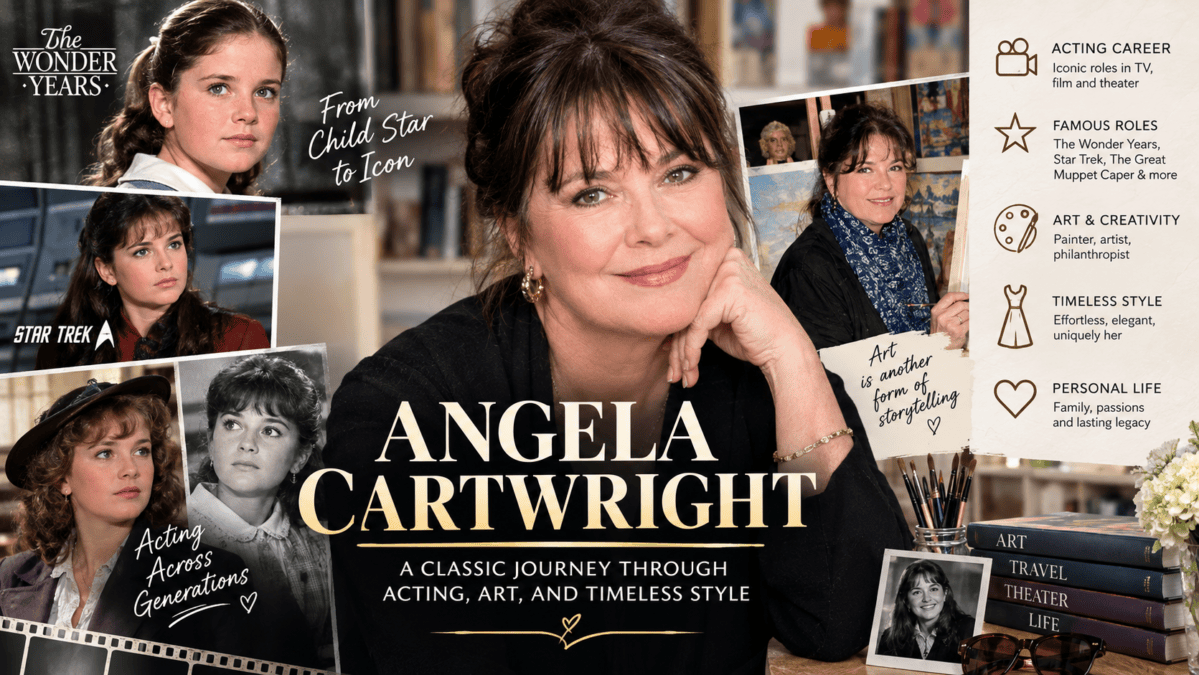
Angela Cartwright is a familiar name to fans of classic Hollywood, particularly those who remember The Sound of Music and Lost in Space. From her early success as a child actress to her later pursuits in photography and fine art, her career demonstrates how creativity can evolve across different stages of life.
Her story also offers an interesting perspective on vintage fashion, television history, and the lasting influence of classic screen styling. Through her memorable roles and artistic interests, she remains relevant to audiences who appreciate entertainment history and timeless personal style.
Early Life and the Start of Her Acting Career

Born on September 9, 1952, in Altrincham, Cheshire, England, Angela Cartwright moved to the United States with her family when she was young. She entered the entertainment industry during childhood, a period when American television was becoming an increasingly important part of family life.
Her breakthrough came with The Danny Thomas Show, in which she played Linda Williams. Working on a popular sitcom gave her early experience in front of the camera and introduced her to audiences who followed the show’s family-centered humor and relationships.
Child performers during this era often had to balance demanding production schedules with their education and personal development. Cartwright’s early career established her as a recognizable young actress and provided the foundation for her later work in film and television.
The Sound of Music and Her Rise to Fame

One of the defining moments in Angela Cartwright’s career was her appearance in The Sound of Music, the celebrated 1965 musical directed by Robert Wise. Starring Julie Andrews and Christopher Plummer, the film follows Maria, a young woman who becomes a governess to the von Trapp children before their lives change dramatically.
Cartwright portrayed Brigitta von Trapp, one of the family’s children. Her role contributed to the film’s warmth and family dynamics, helping make its story memorable for generations of viewers.
The film is also notable for its costume design. From traditional dresses to coordinated children’s outfits, the clothing establishes the historical setting and helps communicate the personalities of the characters. Its visual identity continues to inspire vintage fashion enthusiasts who appreciate classic silhouettes and understated elegance.
Lost in Space and 1960s Television Style

Another significant milestone was her role as Penny Robinson in Lost in Space, the science-fiction series that premiered in 1965. The show followed the Robinson family’s adventures in space, combining family drama with imaginative futuristic storytelling.
Unlike the historical setting of The Sound of Music, Lost in Space embraced a forward-looking visual style. Its costumes, coordinated outfits, and futuristic details reflected the era’s optimism about technology and space exploration.
For fashion enthusiasts, the series provides an example of how clothing can help establish a fictional world. Modern retro styling often borrows from such productions through streamlined silhouettes, structured garments, and playful space-age influences.
Angela Cartwright’s Fashion and Vintage Style Influence

Although Cartwright is not primarily known as a fashion designer, her screen appearances offer a window into the clothing and styling of mid-century entertainment. Her best-known productions featured looks shaped by the conventions of the 1950s and 1960s, including modest dresses, structured collars, classic knitwear, and coordinated outfits.
These styles remain useful sources of inspiration for contemporary wardrobes. A Peter Pan collar blouse, for example, can add a vintage touch to tailored trousers, while a simple A-line dress can create a classic silhouette without appearing overly formal.
The practical lesson is to adapt vintage details rather than recreate an entire historical outfit. Pairing retro-inspired clothing with modern shoes, minimalist jewelry, or a contemporary handbag creates a balanced look that feels wearable today.
Her Creative Life Beyond Acting

Beyond her acting career, Cartwright has explored photography, fine art, and writing. These creative pursuits allow her to express herself through visual composition and personal interpretation rather than through scripted characters.
Photography, in particular, shares an important connection with fashion. Both disciplines rely on lighting, composition, color, texture, and attention to detail. A photographer can change the mood of an image through a different angle or lighting choice, just as a stylist can transform an outfit through accessories and proportions.
Her wider artistic interests demonstrate that a career does not have to remain limited to the field that first brings recognition. Creative skills can develop over time, allowing people to explore new forms of expression while maintaining connections to their earlier work.
Quick Facts About Angela Cartwright
| Detail | Information |
|---|---|
| Full name | Angela Margaret Cartwright |
| Date of birth | September 9, 1952 |
| Birthplace | Altrincham, Cheshire, England |
| Profession | Actress, artist, photographer, author |
| Famous film role | Brigitta von Trapp |
| Famous television role | Penny Robinson |
| Notable productions | The Sound of Music, Lost in Space, The Danny Thomas Show |
| Creative interests | Photography, fine art, writing |
Her Lasting Influence on Entertainment and Style

The continued popularity of The Sound of Music and Lost in Space has helped preserve Cartwright’s place in entertainment history. Both productions remain recognizable examples of their respective genres, attracting viewers interested in classic musicals, science fiction, and television nostalgia.
Their visual styles are also valuable to fashion enthusiasts. Period costumes preserve details about silhouettes, fabrics, hairstyles, and the relationship between clothing and storytelling. These elements can inform contemporary editorial photography, costume design, and vintage-inspired personal style.
Her career also illustrates a broader principle: public recognition can open doors to creative opportunities beyond acting. Her artistic pursuits add another dimension to the legacy established through her childhood performances.
Read More: Kate Upton Kids: Meet Her Two Children, Genevieve and Bellamy Verlander
Frequently Asked Questions
What is Angela Cartwright best known for?
She is best known for playing Brigitta von Trapp in The Sound of Music and Penny Robinson in the original Lost in Space television series. She also appeared as Linda Williams in The Danny Thomas Show.
How old is Angela Cartwright?
Born on September 9, 1952, she is 74 years old as of October 2026.
What character did Angela Cartwright play in The Sound of Music?
She played Brigitta von Trapp, one of the children in the von Trapp family. Her performance formed part of the ensemble in the acclaimed 1965 musical.
Was Angela Cartwright in Lost in Space?
Yes. She portrayed Penny Robinson in the original science-fiction television series, which premiered in 1965 and followed the Robinson family’s adventures in space.
Is Angela Cartwright involved in fashion design?
She is best known for acting and her artistic pursuits rather than fashion design. However, her classic screen appearances provide inspiration for discussions of vintage clothing, costume design, and 1960s style.
What artistic work has Angela Cartwright pursued outside acting?
Her creative interests include photography, fine art, and writing. These pursuits demonstrate her engagement with visual storytelling beyond film and television.
Conclusion
Angela Cartwright‘s journey from child actress to multifaceted creative professional reflects the lasting value of artistic curiosity. Her performances in The Danny Thomas Show, The Sound of Music, and Lost in Space established her place in entertainment history, while her interests beyond acting reveal a broader creative identity.
For fashion readers, her career offers more than nostalgia. The costumes and styling associated with her best-known productions provide inspiration for understanding vintage aesthetics and adapting classic looks for modern wardrobes.
The lasting takeaway is that personal style and creativity evolve over time. Classic screen performances can preserve the spirit of an era, while the people behind them continue to explore new ways to express themselves.