

Introduction
Stella McCartney is a British fashion designer who has built a luxury empire on a radical premise: fashion can be both desirable and responsible. As a lifelong vegetarian and animal rights advocate, she launched her eponymous label in 2001 with a strict no-leather, no-fur, no-feathers policy—a stance that was revolutionary then and remains a benchmark for ethical luxury today. In 2026, her influence has never been more pronounced.
She received France’s highest civilian distinction, the Légion d’honneur, was honored with a TIME Earth Award for her climate leadership, and staged a Paris Fashion Week show that made ocean conservation the central message. This article explores the key facts of her career, the innovations driving her brand, and why Stella McCartney remains the most consequential figure in sustainable fashion.
Key Facts at a Glance
| Fact | Detail |
|---|---|
| Full Name | Stella Nina McCartney |
| Born | 13 September 1971, Lambeth, London, England |
| Education | Central Saint Martins, London (graduated 1995) |
| Label Founded | 2001, in a joint venture with Gucci Group |
| Core Principle | Cruelty-free luxury: no leather, fur, feathers, or exotic skins |
| Signature Accessory | The Falabella bag (launched Winter 2009), a vegan icon with a diamond-cut chain |
| Recent Landmark Honors | Légion d’honneur (2026); TIME Earth Award (2026); CBE (2023) |
| Brand Status | Independent again after repurchasing LVMH’s minority stake in 2025 |
The 2026 Milestones: A New Era of Recognition
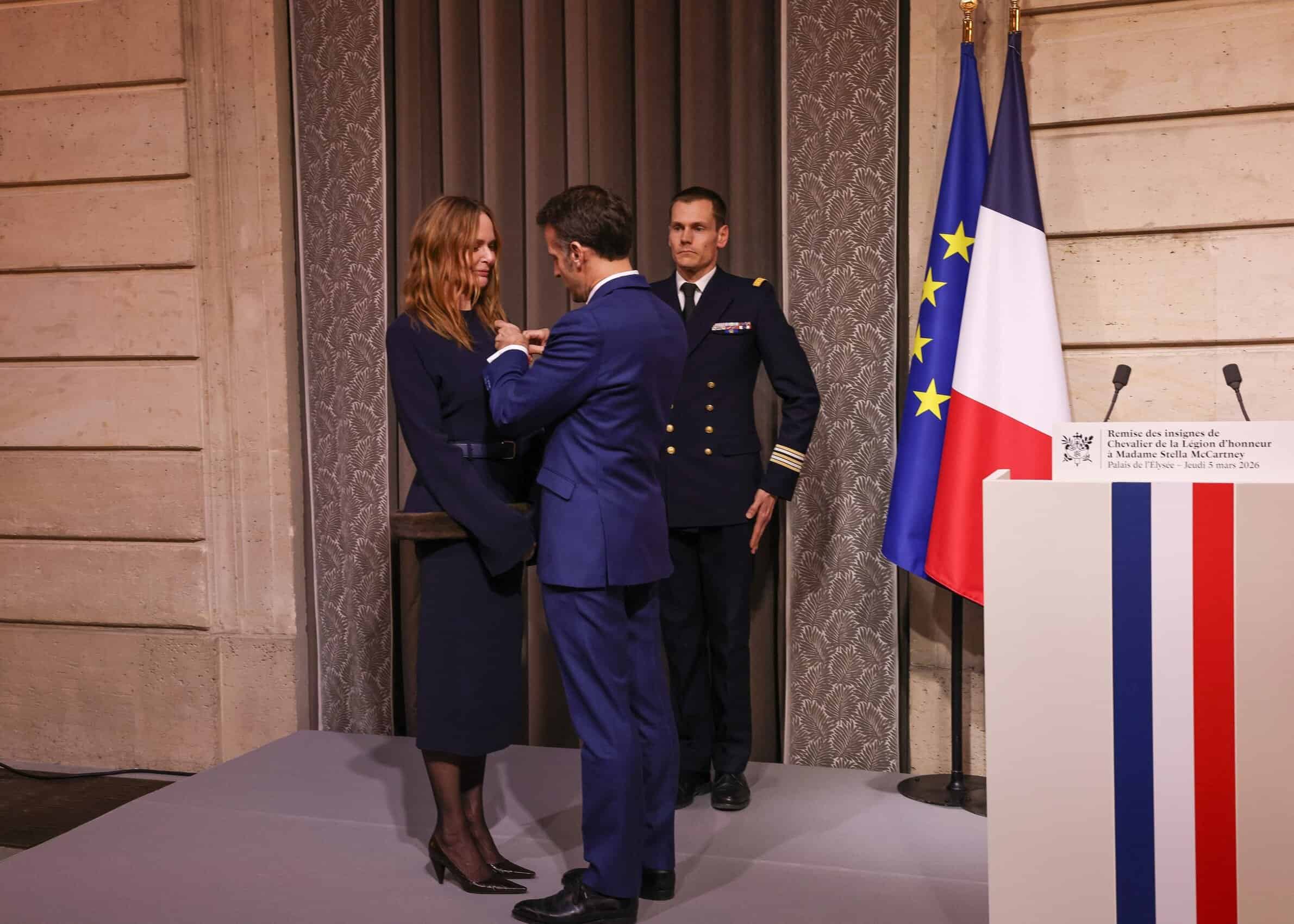
The past year has marked a turning point for Stella McCartney, defined by institutional recognition and creative boldness. In March 2026, French President Emmanuel Macron awarded her the Légion d’honneur, praising her “creative and environmental leadership” and her commitment to proving that fashion can be responsible. The ceremony at the Élysée Palace was attended by a constellation of cultural figures, including Oprah Winfrey, Anna Wintour, and her father, Sir Paul McCartney.
Days later, she received a TIME Earth Award in London, presented by Cate Blanchett. In her acceptance speech, McCartney articulated the stakes of her work with characteristic directness: “Every second, a truckload of textiles is burned or buried. Hundreds of millions of trees are felled for clothing fibers. Toxic chemicals used in leather tanning seep into rivers and into human bodies. And billions of animals are slaughtered in the name of ‘luxury'”.
These honors coincide with a crucial structural shift: in 2025, McCartney repurchased LVMH’s minority stake in her company, returning the brand to full independence. She remains a global ambassador on sustainability for LVMH, advising its executive leadership on environmental strategy—a dual role that underscores her singular position as both an independent designer and an industry-wide authority.
Sustainability: From Niche Principle to Industry Blueprint
Stella McCartney’s sustainability strategy has never been a marketing add-on; it is the operating system of the business. The brand’s material innovation pipeline reads like a catalogue of future-fashion solutions.
Next-Generation Materials
| Innovation | What It Is | Application |
|---|---|---|
| Brewed Protein™ | A lab-grown fibre produced through precision fermentation, developed with Japanese biotech firm Spiber | Alternative to cashmere and wool; used in Winter 2026 knitwear |
| MIRUM® | A plant-based, plastic-free, fully circular material | Vegan leather alternative |
| VEGEA | A grape-based vegan leather made from winery waste | Bags and accessories |
| YATAY M | A mycelium-based vegan alternative to exotic skins | Hand-finished like leather |
| Fevvers | A plant-based, naturally dyed alternative to ostrich feathers | World-first feather replacement |
| RCO100™ | 100% recycled cotton | Denim and jersey |
The Winter 2026 collection was crafted using 93% responsible materials, a figure that places the brand far ahead of most luxury peers. The Summer 2026 campaign was 98% conscious, with every piece 100% cruelty-free.
The Zero-Wool Statement
At her Spring/Summer 2027 show in October 2026, McCartney made a deliberate choice to eliminate wool from the runway entirely. “There is no wool on the runway this season, and I’m proud of that,” she said, while acknowledging the complexity of the issue: “If you can shear a sheep in a kind, humane way, then I don’t, personally, think that’s the end of the world. When we do have wool in our collections it is responsibly sourced. But the way a lot of wool production is done today is deeply cruel”. The show’s theme, “Sea life, not sea food,” spotlighted overfishing and ocean conservation, with a video invitation from oceanographer Sylvia Earle setting the tone.
Brand Evolution: A Timeline of Firsts
Stella McCartney’s career has been punctuated by a series of industry firsts that have consistently expanded what a luxury fashion house can be.
| Year | Milestone |
|---|---|
| 1995 | Graduates from Central Saint Martins with a collection modeled by Kate Moss and Naomi Campbell |
| 1997 | Appointed Creative Director of Chloé, succeeding Karl Lagerfeld |
| 2001 | Launches eponymous label in a joint venture with Gucci Group; shows first collection in Paris |
| 2003 | Releases first fragrance, STELLA |
| 2004 | Launches adidas by Stella McCartney performance wear partnership |
| 2009 | Introduces the Falabella bag, which becomes a vegan bestseller |
| 2012 | Designs Team Great Britain kit for the London Olympics—first fashion designer to do so across all competitions |
| 2018 | Purchases Kering’s stake; designs Meghan Markle’s wedding reception dress; launches UN sustainable fashion charter partnership |
| 2019 | Enters strategic partnership with LVMH while retaining majority ownership |
| 2020 | First fashion designer to appear on the cover of American Vogue |
| 2023 | Receives CBE from King Charles III |
| 2025 | Repurchases LVMH’s minority stake, returning to full independence |
| 2026 | Awarded Légion d’honneur; receives TIME Earth Award; stages zero-wool ocean-themed show |
Expert Insight: Why the Independent Chapter Matters
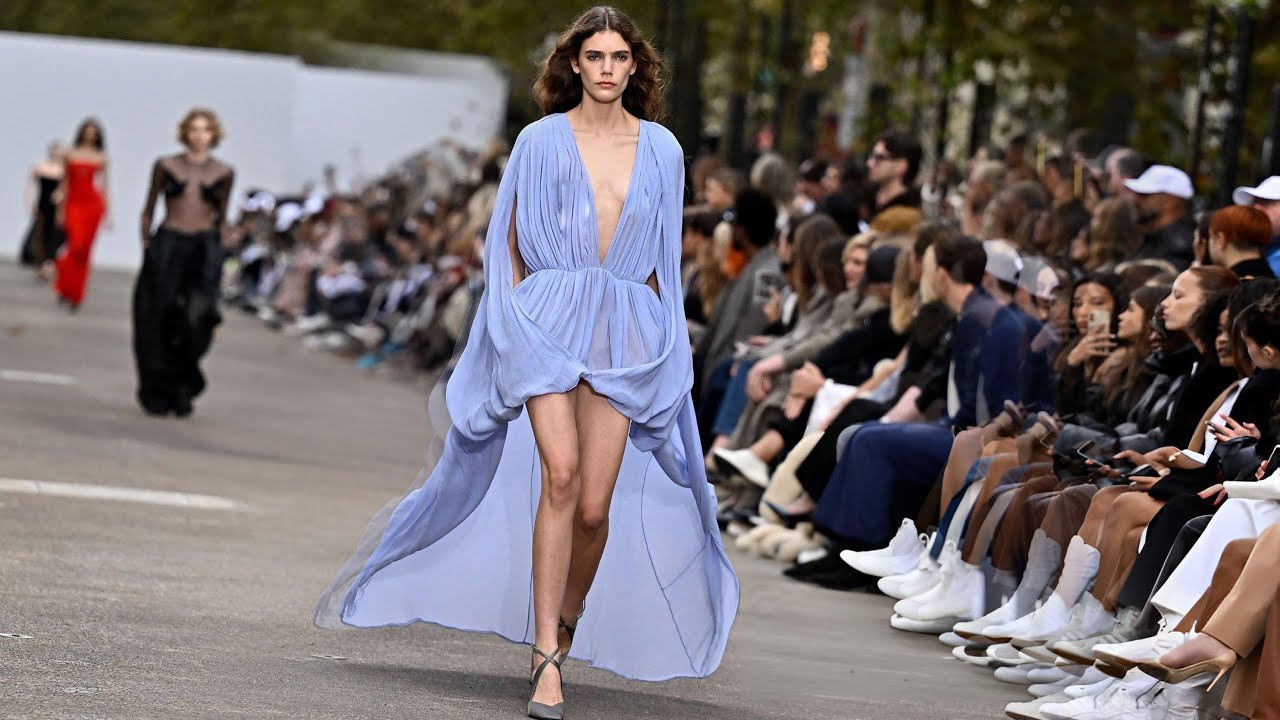
The reacquisition of full independence in 2025 is more than a corporate footnote. For two decades, McCartney navigated the demands of luxury conglomerates—first Kering, then LVMH—while maintaining her ethical red lines. Her ability to do so proved that sustainability and commercial viability were not mutually exclusive. Now, as an independent house with a global sustainability advisory role at LVMH, she occupies a unique dual position: she can move faster as an entrepreneur while still shaping the environmental strategy of one of the world’s largest luxury groups.
This independence also allows the brand to double down on its core identity. The Winter 2026 campaign, the first fully realized expression of the post-reacquisition era, was described by the house as “independent, self-defined and re-focused on the principles the house has championed since day one”. The collection blended Savile Row tailoring, childhood memories, and animal-inspired textures—a reminder that McCartney’s sustainability is inseparable from her personal history and design language.
Read More: Christian Louboutin Shoes: The Ultimate Guide to Styles, Fit, Care & Authenticity
Frequently Asked Questions
Is Stella McCartney’s brand completely vegan?
Yes. Since the brand’s founding in 2001, Stella McCartney has never used animal leather, fur, feathers, or exotic skins in any collection. The label describes itself as 100% vegan and cruelty-free, relying on innovative plant-based and lab-grown alternatives.
What is the Falabella bag?
The Falabella is Stella McCartney’s signature bag, first introduced in Winter 2009. It is distinguished by a hand-laced cotton and diamond-cut chain detail and is entirely vegan. It remains one of the brand’s bestselling collections and has evolved into new textures and silhouettes, including mink-effect and croc-effect vegan alternatives.
Why did Stella McCartney receive the Légion d’honneur?
She was awarded France’s highest civilian honor in March 2026 by President Emmanuel Macron in recognition of her contributions to fashion, sustainability, innovation, and animal welfare. Macron specifically praised her “creative and environmental leadership” and her commitment to proving that fashion can be “both desirable and responsible”.
Does Stella McCartney still work with Adidas?
Yes. The adidas by Stella McCartney partnership, launched in 2004, continues to produce performance wear. McCartney also designed the first-ever vegan Stan Smith trainers in 2018 and has designed Olympic kits for Team Great Britain.
What is Brewed Protein™?
Brewed Protein™ is a lab-grown fibre created through precision fermentation, developed in collaboration with Japanese biotech firm Spiber. It serves as an alternative to animal-derived materials such as wool and cashmere, with a significantly lower environmental impact. It was first used in McCartney’s collections in 2025 and features prominently in Winter 2026 knitwear.
Is Stella McCartney related to Paul McCartney?
Yes, she is the daughter of Sir Paul McCartney, the former Beatle, and Linda McCartney, a photographer and animal rights activist. Her upbringing in a family that respected nature and practiced vegetarianism profoundly shaped her approach to fashion.
Conclusion
Stella McCartney has spent twenty-five years proving a thesis that much of the luxury industry is only now beginning to accept: ethical production and desirability are not opposing forces. The Stella McCartney brand today is a fully independent house with a 93%-responsible Winter 2026 collection, a zero-wool runway strategy, and a founder who holds both France’s highest civilian honor and a TIME Earth Award. For readers seeking a model of how fashion can confront the climate crisis without sacrificing beauty or commercial relevance, McCartney’s career offers a clear and rigorously documented answer. The next chapter—independent, self-defined, and still determined—is the one worth watching most closely.