
Introduction
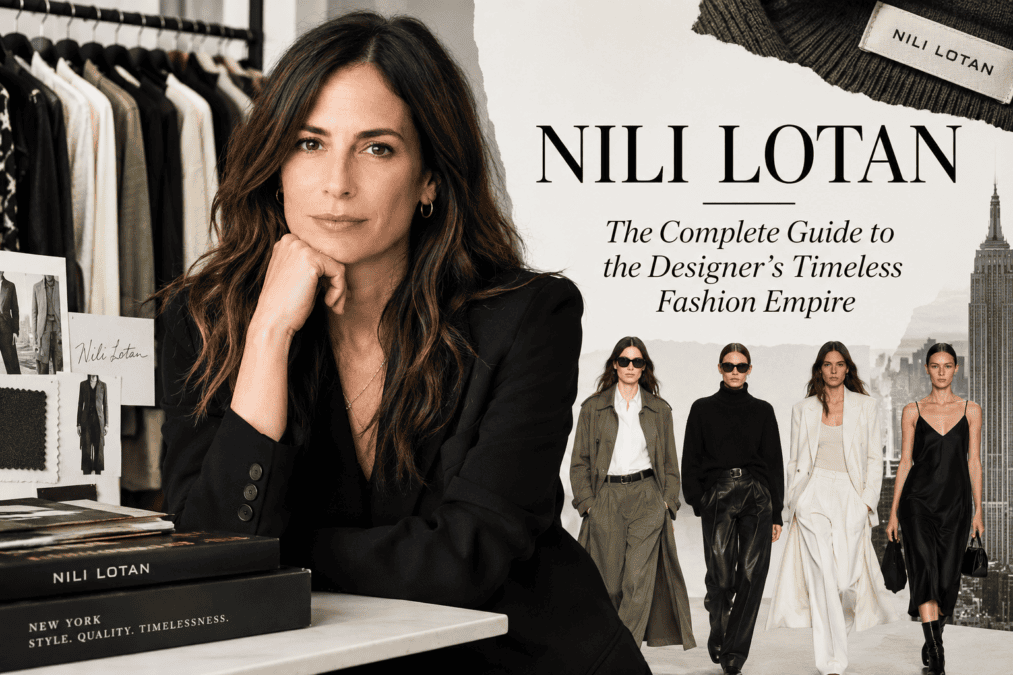
Nili Lotan is an Israeli-American fashion designer whose eponymous label has quietly become one of the most influential independent brands in contemporary fashion. Since launching her namesake line in 2003, Lotan has built a business that generated $100 million in revenue by 2022 and is on track to reach $150 million in 2026—all without outside investment or traditional fashion shows. What makes Nili Lotan remarkable isn’t just the numbers, but the philosophy behind them: timeless wardrobe staples designed for real women, manufactured largely in the United States, and priced with intentional restraint.
If you’ve encountered the brand through a pair of Shon jeans, a perfectly cut blazer, or a recommendation from a friend who seems to always look effortlessly put together, this guide will explain what makes Nili Lotan worth knowing—and how to navigate the collection.
Who Is Nili Lotan?
Early Life and Career Before the Brand
Nili Lotan grew up in Israel, the daughter of European immigrants. Her father was a real estate developer, and she has described her upbringing as entrepreneurial in spirit. She moved to New York City in 1980 and began her fashion career after studying at Israel’s Shenkar College of Design.
Before launching her own label, Lotan spent over two decades working within some of America’s most recognizable fashion houses. Her résumé includes leadership roles at Ralph Lauren, Liz Claiborne, Nautica, and Adrienne Vittadini. She has said she spent six years at each company, absorbing the discipline of design, production, and business management that would later define her independent approach.
Why She Launched Her Own Label
In 2003, Lotan invested $25,000 of her own money and produced a six-piece collection: three trousers, a top, and two jackets. She had no outside investors, no fashion shows, and no marketing budget. What she did have was a clear point of view about what women actually needed in their closets—pieces that felt luxurious but not precious, polished but not fussy.
She opened her first store above her atelier on Duane Street in Tribeca in 2006 with $20,000 and generated $250,000 in revenue within two months. That single decision—to invest in retail before wholesale expansion—set the template for the brand’s disciplined, margin-conscious growth strategy.
Key Facts About Nili Lotan
| Attribute | Detail |
|---|---|
| Founder | Nili Lotan |
| Founded | 2003 |
| Headquarters | New York City (Tribeca) |
| Origin | Israel; moved to NYC in 1980 |
| Revenue (2022) | $100 million |
| Revenue (2026 est.) | $150 million |
| Outside Investment | None (bootstrapped) |
| Domestic Production | Approximately 70% U.S.-made |
| Signature Product | Shon Jean (barrel-leg denim) |
| Retail Footprint | 12 stores by end of 2026 |
| Celebrity Following | Jennifer Aniston, Gwyneth Paltrow, Gigi Hadid, Anne Hathaway |
The Nili Lotan Aesthetic: Quiet Luxury with Attitude
Design Philosophy
Nili Lotan’s work sits at an unusual intersection in fashion. It is neither trend-driven nor deliberately minimalist in the way that term is often used. Lotan herself has described her collections as “not fashion-y, not trendy, and not basic”. The brand’s recurring inspirations include Americana, military fatigues, rock ‘n’ roll, and Westernwear—references she has returned to season after season, remixing rather than reinventing.
The result is a wardrobe that feels lived-in yet elevated. A silk blouse might be paired with utility trousers. A tailored blazer might sit over a worn-in tee. A Western boot might appear alongside office-appropriate suiting. Lotan’s aesthetic is less about a single signature silhouette than about the tension between contrasting elements: feminine and masculine, refined and rugged, classic and subversive.
What Makes It Different
Unlike many contemporary brands that chase seasonal trends or produce for wholesale calendars, Nili Lotan designs continuously. The designer has described designing “every week” rather than by season or theme. This approach allows the brand to respond to customer demand in real time rather than six months ahead.
The brand’s manufacturing strategy reinforces this agility. With approximately 70% of production kept in the United States, Nili Lotan can replenish orders quickly—a decisive advantage during the post-pandemic period when supply chain disruptions left many competitors unable to meet demand. Lotan has described inventory as “the killer in our business,” and her control over production has been central to the brand’s financial health.
Signature Products and Price Points
The Shon Jean: A Cult Classic
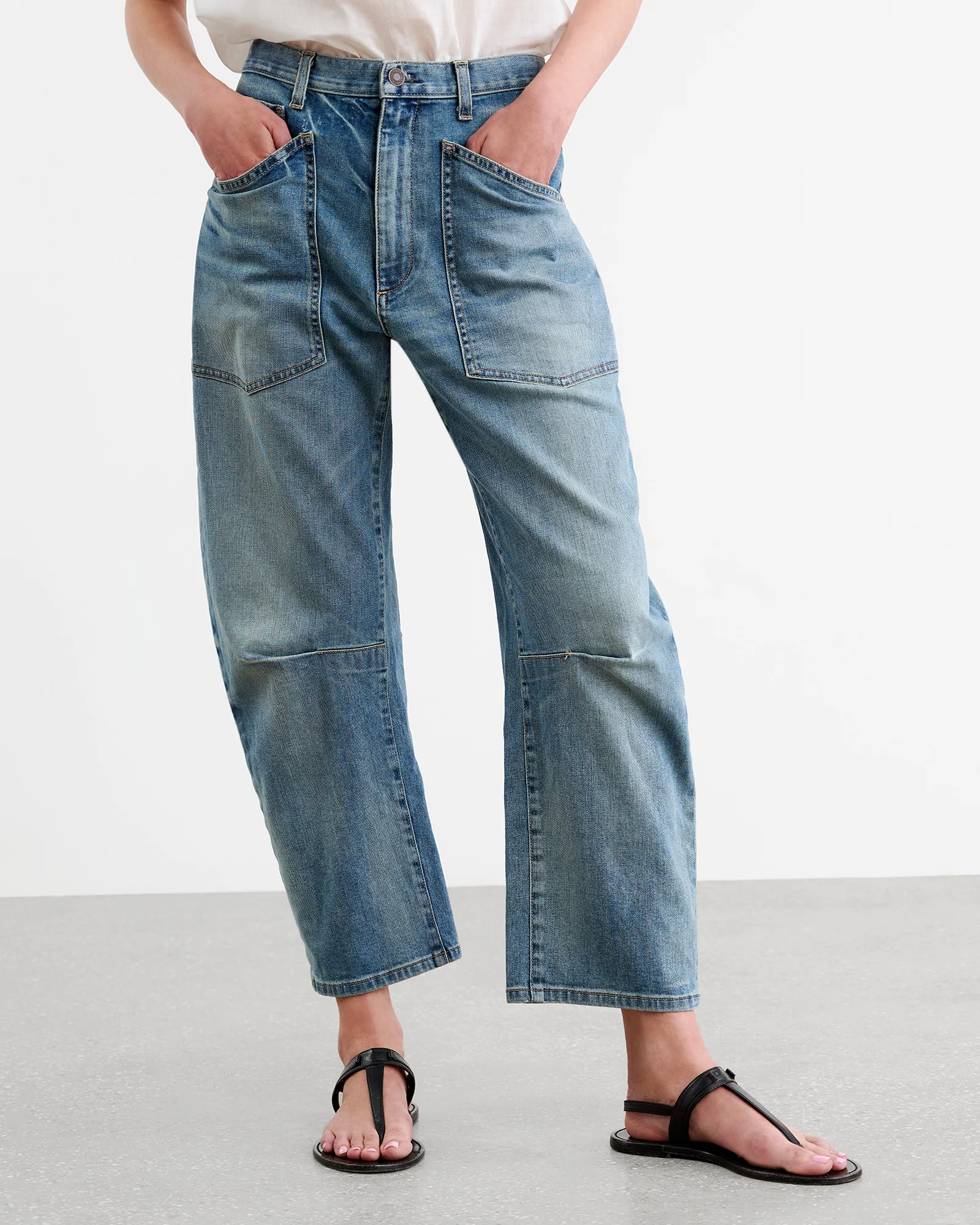
The Shon jean is the product most closely associated with Nili Lotan. Introduced when skinny jeans dominated the market, the Shon features a mid-rise, relaxed barrel-leg silhouette inspired by vintage workwear and military garments. Lotan styled it with unexpected pairings—blazers, lacy blouses—and the piece gradually developed a cult following that transcended trend cycles.
Even as barrel-leg denim became a broader fashion moment, the Shon continued to sell steadily. Lotan attributes this to the fact that the jean captures a feeling rather than simply following a silhouette: “People are drawn to my pants not because they’re in fashion, but because they capture a feeling: It’s rebellious, it’s cool, it has a personality”.
The denim is sourced from Japanese mills, which Lotan has described as treating fabric “with reverence and patience.” The brand’s Japanese denim is chosen for “integrity, depth of color, and the ability to age beautifully over time”.
Iconic Pieces and Typical Pricing
| Product | Typical Price Range (USD) | Notes |
|---|---|---|
| Shon Jean | $400–$410 | Barrel-leg, mid-rise, Japanese stretch denim |
| Signature Trousers | ~$400 | Often compared favorably to The Row ($1,000+) |
| Blazers | $890–$1,390 | Wool, tweed, and leather options |
| Silk Blouses | $600–$800 | Japanese cotton and Italian silk |
| Cashmere Knitwear | $500–$900 | Recycled cashmere blends available |
| Boots & Footwear | $500–$900 | Western-inspired silhouettes |
| Handbags | $800–$2,500 | Italian leather, launched 2025 |
Lotan’s pricing philosophy is deliberate. She has positioned the brand “accessibly compared to similar luxury wares”—a strategy that has resonated with women who want elevated design without the markup of legacy luxury houses.
How Nili Lotan Built a $150 Million Brand
The Bootstrapped Approach
Nili Lotan has never taken outside investment. She launched with $25,000 of her own money and has grown the business conservatively, prioritizing profitability over expansion. The brand carries no debt and has remained independent for over two decades.
This approach has given Lotan unusual control over her company. She serves as both creative director and CEO, making decisions based on instinct rather than market signals. “The space is so crowded that there is no opportunity if you look at it on paper,” she told Business of Fashion. “But if you stay honest to your brand, and you really analyse it from, ‘OK, what is it that the woman who buys Nili needs?’ then I can find the opportunity”.
Growth Milestones
| Year | Milestone |
|---|---|
| 2003 | Launches with six-piece collection, $25,000 investment |
| 2006 | Opens first retail store on Duane Street, Tribeca |
| 2020 | Barneys New York closes; Nili Lotan had been its #2 selling apparel brand after The Row |
| 2022 | Reaches $100 million in revenue |
| 2024 | Opens first menswear store in Tribeca |
| 2025 | Launches first handbag collection (18 styles, made in Spain and Italy) |
| 2026 | Opens denim-only store; on track for $150 million; expands to 12 retail locations |
The Post-Pandemic Surge
The “quiet luxury” trend that accelerated after 2020 benefited Nili Lotan significantly. The brand’s emphasis on well-made, understated separates aligned perfectly with a cultural shift away from logo-heavy fashion. Because Lotan had retained domestic manufacturing capacity, she was able to meet demand while other brands struggled with supply chain issues.
International expansion has also contributed to growth. Sales outside the U.S. now account for nearly 20% of the business, driven largely by direct-to-consumer channels. The brand has expanded into South Korea and other markets, opening four new locations in 2026 alone.
The Celebrity Following
Nili Lotan has never paid for celebrity placements or launched starry campaigns. The brand’s famous customers have found it organically, drawn to the clothes’ practicality and understated sophistication. The list of women who wear Nili Lotan includes:
- Jennifer Aniston
- Gwyneth Paltrow
- Rosie Huntington-Whiteley
- Gigi Hadid (described by Vogue as the brand’s “wardrobe secret weapon”)
- Anne Hathaway
- Jennifer Lawrence
- Olivia Colman (photographed in Shon Barrel-Leg Jeans)
- Jordana Brewster
The brand’s appeal spans generations. Lotan has noted that her customer “is 65 and her customer is 25,” and she has never designed with a single age demographic in mind. The majority of her customers, however, are women aged 40–45 who lead busy, working lives and want clothing that functions as well as it looks.
Practical Guide: Shopping Nili Lotan
Sizing and Fit
Nili Lotan’s sizing has received mixed feedback from customers. Some reviewers note that certain styles—particularly denim—run small, with one customer advising that they needed to size up two sizes from their usual Nili Lotan size. Others report that styles like the Cami Gown fit true to size.
General guidance:
- Denim (Shon, Joan, Otis): Consider sizing up if between sizes; rigid Japanese denim has limited stretch.
- Tailoring: Typically true to size, but check individual product measurements.
- Knitwear: Usually consistent with standard sizing.
- Always check the specific product page for model measurements and fit notes.
Where to Buy
Nili Lotan is available through:
- Official website (nililotan.com) — full collection, direct-to-consumer
- Brand boutiques — Tribeca (flagship and denim store), East Hampton, Southampton, Palm Beach, Los Angeles, Greenwich, and international locations
- Wholesale partners — upwards of 150 stockists globally
- Luxury retailers — Shopbop, Revolve, Mytheresa, Net-a-Porter, FWRD
Return Policy
The brand’s return policy varies by purchase type. Seasonal markdowns are eligible for return or exchange within 7 days of delivery. Some items are marked as final sale and are not eligible for return. Returns through the official website must use the return label provided through the brand’s portal; returns sent with other postage will not be accepted.
Expert Insights: Why Nili Lotan Matters

The Case for Independent Design
Nili Lotan represents a model of fashion business that has become increasingly rare: a profitable, independent brand that has grown without compromising its creative vision or taking on debt. In an industry where many young designers rely on investor funding and burn through capital chasing growth, Lotan’s approach offers a counter-narrative. She has demonstrated that patience, discipline, and a clear understanding of one’s customer can build a sustainable business.
The Quiet Luxury Alignment
The brand’s positioning within the “quiet luxury” movement is not a recent pivot but a consistent expression of Lotan’s design philosophy. She has been making understated, high-quality wardrobe staples since 2003, long before the term entered the mainstream. This authenticity—rather than trend-chasing—is a significant part of the brand’s resilience. As other quiet luxury players face questions about their differentiation, Nili Lotan’s two-decade track record provides a credible foundation.
What to Watch
The brand’s expansion into footwear, handbags, and swimwear signals a strategy of growing within its existing customer base rather than acquiring new ones through aggressive marketing. The denim-only store in Tribeca is an experiment in retail specialization that could influence how other brands approach category-specific retail. International growth, particularly in South Korea, will be a key metric to watch as the brand approaches its $150 million target.
Read More: Haider Ackermann: The Designer Redefining Tom Ford and Modern Luxury
Frequently Asked Questions
What is Nili Lotan known for?
Nili Lotan is best known for its elevated wardrobe staples—particularly the Shon barrel-leg jean, tailored trousers, and blazers that blend military, Western, and rock ‘n’ roll influences. The brand is recognized for its independent, bootstrapped business model and its cult following among style-conscious women.
Who is the designer behind Nili Lotan?
Nili Lotan is the founder, creative director, and CEO of her namesake brand. She was born in Israel, moved to New York in 1980, and spent over two decades working at Ralph Lauren, Liz Claiborne, and other American fashion houses before launching her own label in 2003.
How much do Nili Lotan clothes cost?
Signature trousers and jeans typically cost around $400–$410. Blazers range from approximately $890 to $1,390, while silk blouses and cashmere knitwear generally fall between $500 and $900. The brand is positioned as more accessible than comparable luxury labels like The Row, where trousers often exceed $1,000.
Is Nili Lotan true to size?
Sizing varies by style. Some denim styles run small, and customers often recommend sizing up. Tailoring and knitwear tend to fit true to size. Always check individual product measurements and model fit notes before purchasing.
Where is Nili Lotan made?
Approximately 70% of Nili Lotan’s production is based in the United States. Denim is sourced from Japanese mills, and certain accessories and handbags are produced in Spain and Italy. The brand’s domestic manufacturing allows for faster replenishment and tighter inventory control.
Does Nili Lotan have sales?
Yes. Seasonal markdowns occur periodically, and these items are eligible for return or exchange within 7 days of delivery. Some items are marked as final sale. The brand’s official website and authorized retailers occasionally offer promotions.
Conclusion
Nili Lotan has built something unusual in contemporary fashion: a brand that has grown to $150 million in revenue without outside investment, without fashion shows, and without compromising its founding vision. The label’s success rests on a simple but difficult-to-execute principle—design clothes that women actually want to wear, make them well, price them fairly, and let the product speak for itself.
For anyone considering investing in a Nili Lotan piece, the Shon jean remains the most distinctive entry point, but the broader collection offers a coherent wardrobe system built around the same values: quality, versatility, and quiet confidence. In a market saturated with trends and noise, Nili Lotan’s endurance is a reminder that substance still matters.