
Introduction
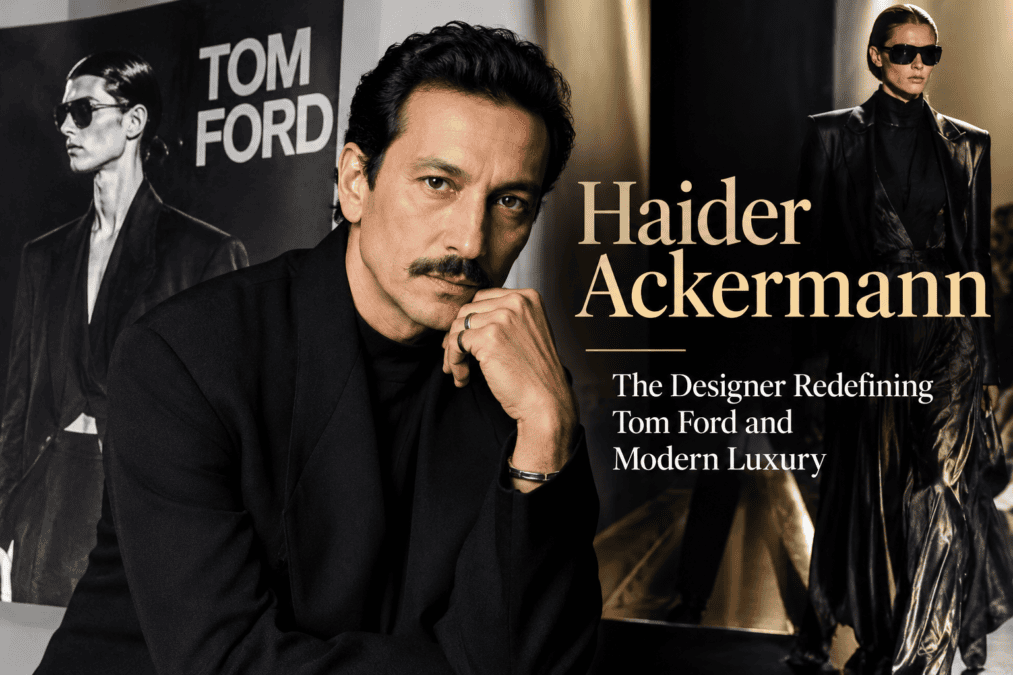
Haider Ackermann is one of the most consequential fashion designers working today. As creative director of Tom Ford, a role he assumed in September 2024, the Colombian-born French designer has already delivered two critically acclaimed ready-to-wear collections and earned GQ’s Designer of the Year honor for 2025. His appointment followed a high-profile false start by Peter Hawkings and signaled a decisive new chapter for a brand long defined by its founder’s singular vision.
Ackermann’s ascent matters not just because of the houses he now leads—Tom Ford and Canada Goose—but because his approach to dressing represents a meaningful shift in how luxury fashion understands seduction, tailoring, and modern desire. This article examines his career, his creative philosophy, his impact on Tom Ford, and what his trajectory reveals about the state of fashion today.
Who Is Haider Ackermann?
Haider Ackermann was born in Bogotá, Colombia, in 1971, and adopted by a French family. His upbringing was peripatetic: his father’s work as a cartographer took the family to Ethiopia, Chad, Algeria, the Netherlands, and eventually Belgium, where he studied at the Royal Academy of Fine Arts in Antwerp. He left the academy before graduating, but his education continued through internships, most notably a five-month stint with John Galliano in 1998.
In 2001, at the encouragement of his friend Raf Simons, Ackermann launched his own label and presented his first collection in Paris. Over the following decade, he built a reputation for blending luxurious fabrics with impeccable, often architectural tailoring—clothing that felt romantic, intellectual, and slightly dangerous all at once.
His career has been marked by both remarkable accolades and notable near-misses. He declined an offer to succeed Martin Margiela in 2009. In 2010, Karl Lagerfeld publicly named Ackermann as a possible successor at Chanel. When Galliano was fired from Dior in 2011, Ackermann was rumored to have been approached for the role. Yet he largely chose independence over institutional appointments—until 2016, when he joined Berluti as creative director.
Career Timeline
| Year | Milestone |
|---|---|
| 1971 | Born in Bogotá, Colombia; adopted by a French family |
| Late 1990s | Studied at the Royal Academy of Fine Arts in Antwerp; interned with John Galliano |
| 2001 | Launched eponymous label; presented first collection in Paris |
| 2009 | Declined offer to succeed Martin Margiela |
| 2010 | Karl Lagerfeld names him as a possible Chanel successor |
| 2016–2018 | Creative director at Berluti (three seasons) |
| 2020 | Resigned from his namesake company following a reported business dispute |
| May 2024 | Appointed first-ever creative director of Canada Goose |
| September 2024 | Appointed creative director of Tom Ford |
| March 2025 | Debut Tom Ford collection presented in Paris to critical acclaim |
| December 2025 | Named GQ Designer of the Year |
| 2026 | Presents Fall 2026 and Spring 2027 Tom Ford collections; nominated for Fashion Awards 2026 |
The Berluti Chapter: A Misalliance, Not a Failure
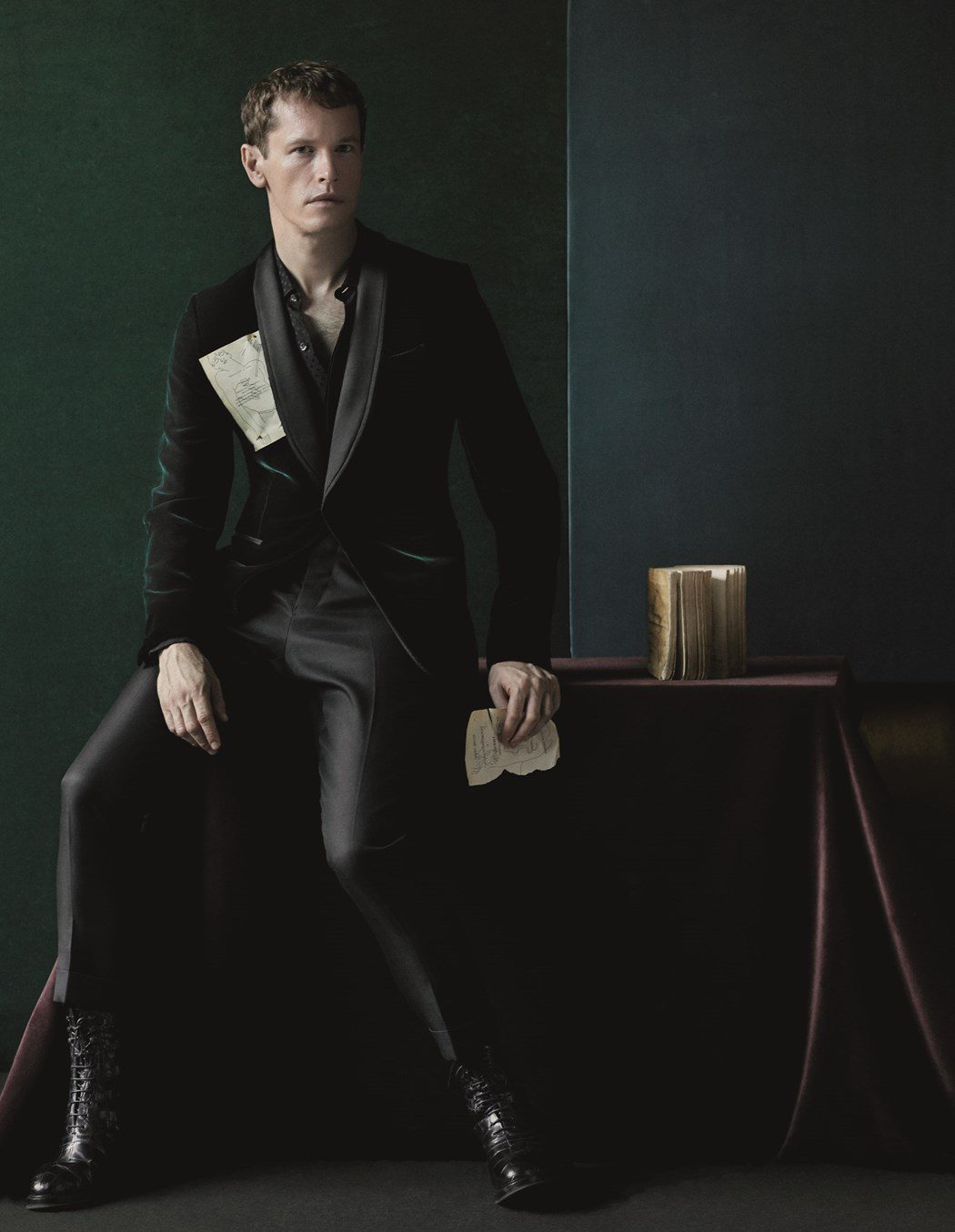
Ackermann’s three-season tenure at Berluti from 2016 to 2018 is often framed as a cautionary tale, but the reality is more nuanced. Berluti’s primary business came from leather goods and accessories, while Ackermann is fundamentally a fashion designer—someone whose talents are best deployed in creating compelling clothing and silhouettes, not in shepherding a accessories-driven luxury house.
His exit was widely viewed as an unfortunate mismatch rather than a creative failure. The experience, however, gave him valuable insight into the mechanics of heritage luxury brands and the tensions between artistic ambition and commercial infrastructure—lessons that would prove useful when he took the helm at Tom Ford.
Tom Ford: A Creative Rebirth
The Appointment and Its Context
Tom Ford sold his namesake business to Estée Lauder Companies in a $2.8 billion deal in 2022 and departed the brand in 2023. The first post-Ford designer, Peter Hawkings—who had worked with Ford since 2006—lasted barely a year before leaving amid rumors of a fallout with the founder. By the time Ackermann was appointed in September 2024, the brand needed both continuity and renewal.
Ackermann’s relationship with Ford was not accidental. The two had maintained a respectful flirtation for years. “There’s always been this flirtation between Mr. Ford and I, workwise,” Ackermann told Vanity Fair. “I knew that he looked at my work and respected it. He had written to me privately before, years before.”
The Debut: Fall 2025
Ackermann’s debut show for Tom Ford in March 2025 was a sensation. Staged in a small auditorium just off Place Vendôme in Paris, the collection featured ’80s banker-pinstripe suits with long, languid trousers, silk robes, playful pops of color, and tuxedo shirts unbuttoned to reveal tank tops underneath. It was not sexy in the conventional sense—there were no bared pectorals or exposed abs—but rather suggestive, intimate, and charged with a quiet tension that let the audience’s imagination do the work.
Backstage, Ackermann greeted reporters with a line that became instantly quotable: “I hope I seduced you all.” Tom Ford himself led a standing ovation.
The Philosophy: Sensual, Not Glamorous
Ackermann has consistently resisted the language of “glamour” and “sexiness” that defined the Ford brand under its founder. He prefers the term “sensual.” Backstage after his debut, he insisted, “I don’t understand the word glamour.” Yet the collection was undeniably glamorous—just in a different register. Where Ford’s version of glamour was extroverted and high-octane, Ackermann’s is a slow burn: romantic, expressive, and rooted in the tension between restraint and desire.
This distinction matters. Ackermann is not attempting to imitate Ford’s aesthetic; he is translating it into a new idiom. As Vogue noted, he avoided specific references to Ford’s work at Gucci or Yves Saint Laurent, instead addressing broad categories—daywear in leather, evening looks focused on tailoring and color—and allowing his own sensibility to shape the result.
Fall 2026 and Spring 2027: Building Momentum
The Fall 2026 campaign, photographed by Stuart Winecoff, reprised the seductive tension of the runway collection with a diverse cast ranging from Liu Wen and Aluel Makuach to Kristen McMenamy and Scott Barnhill. Ackermann described the campaign as “a study on characters: individuals of every age and walk of life, depicted in glaring light against a clinical white background, proud of who they are.”
For Spring 2027, presented in October 2026, Ackermann pushed further into what one reviewer called “sexy, sensual, and sophisticated” territory, with daring swimsuits and briefs barely covered by sharply measured jackets and sweaters. The collection was described as a “rich understanding of the Tom Ford legacy and a refreshed vision for its future”.
Canada Goose: A Parallel Appointment
In May 2024, four months before joining Tom Ford, Ackermann was named the first-ever creative director of Canada Goose. His mandate was to lead the brand’s high-fashion-focused line, Snow Goose, and to inject his signature eye for color and silhouette into its parkas and outerwear.
By late 2025, he had unveiled three Snow Goose collections, transforming Canada Goose’s Arctic heritage into something unexpected—turning linings into exteriors, reimagining technical language with jewel-tone colors and sculptural forms. The Spring/Summer 2026 capsule, released in April 2026, was described as “featherlight,” shedding the world’s weight through innovative materials and construction.
Ackermann’s dual role at Tom Ford and Canada Goose is unusual but not unprecedented in fashion. It reflects a growing recognition that his creative vision—rooted in tailoring, texture, and a distinctive approach to color—translates across categories and price points.
Key Facts
| Category | Detail |
|---|---|
| Full Name | Haider Ackermann |
| Born | 1971, Bogotá, Colombia |
| Nationality | French (adopted) |
| Education | Royal Academy of Fine Arts, Antwerp (left before graduating) |
| Notable Internship | John Galliano (1998) |
| Own Label Launched | 2001 (first collection presented in Paris) |
| Berluti Tenure | 2016–2018 |
| Canada Goose Appointment | May 2024 (first-ever creative director) |
| Tom Ford Appointment | September 2024 |
| Tom Ford Debut | March 2025 (Fall 2025 ready-to-wear) |
| Major Recognition | GQ Designer of the Year 2025; nominated for Fashion Awards 2026 |
| Signature Approach | Sensual tailoring, luxurious fabrics, architectural silhouettes, restrained seduction |
Why Haider Ackermann Matters Right Now
A New Vision of Power Dressing
Ackermann’s work at Tom Ford has been described as introducing “a new vision of power dressing”. This is not the power dressing of the 1980s—shoulder pads and aggressive silhouettes—but something more fluid and psychologically complex. His clothes suggest authority without stiffness, desire without vulgarity, and individuality within the codes of luxury.
As one Vogue analysis put it, Ackermann’s Tom Ford represents “traditional tailoring meets true luxury meets fashion with a capital F. It meets the moment where men want to feel sexy in a way they’re not normally allowed to.”
The Most Underrated Designer in Fashion
For years, industry observers have argued that Ackermann was underappreciated relative to his talent. His appointment at Tom Ford, followed by his GQ Designer of the Year award, has begun to correct that. “The bar was impossibly high going in,” one critic noted, “and I feel like the proof has always been there—that Haider was the most underrated designer in the game.”
A Counterpoint to Fashion’s Speed
Ackermann’s career has been defined by deliberate choices rather than reactive ones. He declined Margiela. He walked away from Berluti when it wasn’t the right fit. He spent years in creative collaborations rather than chasing institutional roles. Now, at Tom Ford and Canada Goose, he is demonstrating that patience and creative integrity can coexist with commercial ambition.
Read More: Demna Gvasalia: The Visionary Designer Reshaping Gucci and Modern Fashion
Frequently Asked Questions
What is Haider Ackermann known for?
Haider Ackermann is known for his eponymous label, his tenure at Berluti, and his current roles as creative director of Tom Ford and Canada Goose. He is celebrated for blending luxurious fabrics with impeccable tailoring, creating clothing that is sensual, architectural, and emotionally resonant.
When did Haider Ackermann become creative director of Tom Ford?
Ackermann was appointed creative director of Tom Ford in September 2024. His debut collection for the house was presented during Paris Fashion Week in March 2025.
What is Haider Ackermann’s design philosophy?
Ackermann’s philosophy centers on sensuality rather than overt glamour. He favors restrained seduction, luxurious materials, and tailoring that allows the wearer’s personality to emerge. He has said he prefers the term “sensual” over “sexy” and resists the word “glamour.”
What did Haider Ackermann do before Tom Ford?
Before Tom Ford, Ackermann founded and led his own namesake label, served as creative director of Berluti from 2016 to 2018, and was appointed the first-ever creative director of Canada Goose in May 2024. He also collaborated with Jean Paul Gaultier on a guest couture collection.
Has Haider Ackermann won any awards?
Ackermann was named GQ’s Designer of the Year in 2025 and is nominated for the British Fashion Council’s Fashion Awards 2026. He will also receive the WWD Honor for Womenswear Designer of the Year in October 2026.
What makes Haider Ackermann’s Tom Ford different from Tom Ford’s own designs?
Ackermann’s Tom Ford is less extroverted and more psychologically layered than Ford’s original vision. While Ford’s glamour was high-octane and overtly sexual, Ackermann’s is a slow burn—romantic, intimate, and suggestive rather than explicit.
Conclusion
Haider Ackermann has spent decades building a body of work that is finally receiving the institutional recognition it deserves. At Tom Ford, he has demonstrated that a legacy brand can evolve without losing its essence—that seduction can be reimagined rather than replicated.
At Canada Goose, he has proven that technical outerwear can carry the same emotional weight as a tailored jacket. And through his own career choices, he has shown that the most interesting designers are often the ones who resist the obvious paths. As Ackermann continues to shape Tom Ford’s next chapter, his work offers a compelling argument that fashion’s future belongs not to those who shout loudest, but to those who understand the quiet power of suggestion.