
Introduction
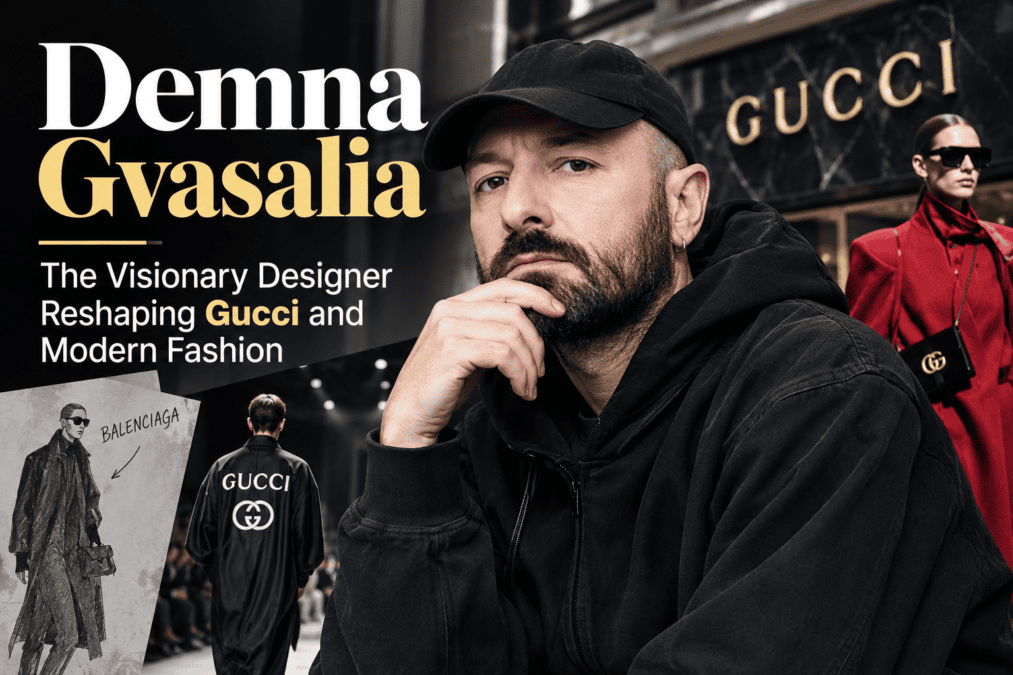
Demna Gvasalia is one of the most influential and polarizing figures in contemporary fashion. As the artistic director of Gucci since July 2025, the Georgian-born designer—known mononymously as Demna—has been tasked with revitalizing one of luxury fashion’s most iconic houses. His appointment followed a decade-long tenure at Balenciaga, where he redefined the boundaries of luxury with oversized silhouettes, streetwear-infused aesthetics, and viral designs that sparked both admiration and controversy.
For fashion enthusiasts, industry professionals, and consumers alike, understanding Demna Gvasalia means understanding the direction of modern luxury fashion itself. His work has consistently challenged conventional notions of taste, beauty, and value, making him a pivotal figure in the ongoing evolution of the fashion industry. This article provides a comprehensive look at his career, design philosophy, major achievements, and his current chapter at Gucci.
Key Facts About Demna Gvasalia
| Detail | Information |
|---|---|
| Full Name | Demna Gvasalia |
| Born | March 25, 1981, Sukhumi, Georgia (former Soviet Union) |
| Age | 45 (as of 2026) |
| Education | Tbilisi State University (International Economics); Royal Academy of Fine Arts, Antwerp (Master’s in Fashion Design, 2006) |
| Current Role | Artistic Director, Gucci (since July 2025) |
| Previous Role | Artistic Director, Balenciaga (2015–2025) |
| Founded | Vetements (2014, with brother Guram Gvasalia) |
| Notable Awards | Chevalier de l’Ordre des Arts et des Lettres (2025); CFDA Award; British Fashion Council Accessories Designer of the Year |
| Estimated Net Worth | Approximately $50 million (2023 reports) |
Early Life and Education

Demna Gvasalia was born on March 25, 1981, in Sukhumi, Georgia, to a Georgian father and a Russian mother. His childhood was marked by the turbulent final years of the Soviet Union and the subsequent Georgian-Abkhaz conflict, which forced his family to flee their home. This experience of displacement and cultural upheaval would later inform the raw, often confrontational aesthetic that defines his work.
Before fashion, Demna pursued a degree in international economics at Tbilisi State University, completing four years of study. In 2000, he moved to Germany, where he continued his economics education before pivoting to his true passion. He enrolled at the Royal Academy of Fine Arts in Antwerp, graduating with a Master’s degree in Fashion Design in 2006.
Antwerp’s fashion program, renowned for producing avant-garde designers like Martin Margiela and the Antwerp Six, provided Demna with a technical foundation in deconstructive patternmaking and conceptual design—skills that would become hallmarks of his later work.
Career Timeline: From Vetements to Gucci
| Year | Milestone |
|---|---|
| 2006 | Graduates from Royal Academy of Fine Arts, Antwerp |
| 2007 | Launches first collection at Tokyo Fashion Week |
| 2009–2012 | Senior Designer at Maison Martin Margiela |
| 2013–2014 | Designer at Louis Vuitton |
| 2014 | Co-founds Vetements with brother Guram Gvasalia in Paris |
| 2015 | Appointed Artistic Director of Balenciaga (October) |
| 2016 | Presents debut Balenciaga collection (March) |
| 2019 | Departs Vetements to focus on Balenciaga |
| 2025 | Steps down from Balenciaga (March); appointed Artistic Director of Gucci (July) |
| 2026 | Debuts first Gucci runway collection, Primavera (February) |
The Vetements Revolution (2014–2019)
In 2014, Demna co-founded Vetements with his brother Guram Gvasalia in a Paris living room. The brand’s name—simply “clothing” in French—signaled its mission: to refocus fashion on the garments themselves rather than spectacle or celebrity. Vetements quickly became a phenomenon, known for its oversized hoodies, deconstructed denim, and a subversive take on everyday wardrobe staples.
The label’s impact was immediate and far-reaching. Demna himself later reflected: “I started Vetements because I was bored of fashion and against all odds fashion did change once and forever since Vetements appeared and it also opened a new door for so many”.
Fashion historian Alexandre Samson, curator at the Palais Galliera in Paris, noted that Demna “created characters that were very clear and reflective of an Eastern, post-USSR youth culture with no money, which looked to, admired, and despised the Western world”. This ambivalence—simultaneously covetous and critical of Western consumer culture—resonated deeply with social-media-driven youth audiences worldwide.
Demna departed Vetements in 2019 to concentrate fully on Balenciaga.
The Balenciaga Era (2015–2025)
Appointment and Early Collections
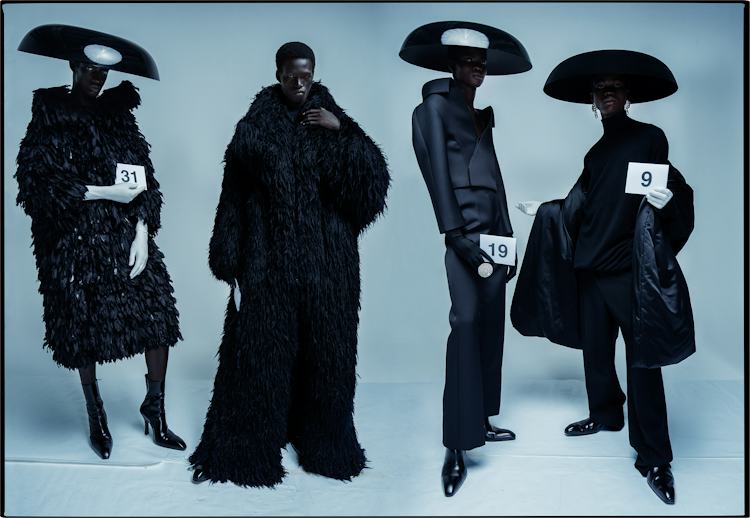
When Demna Gvasalia was named artistic director of Balenciaga in October 2015, he was a relatively unknown figure outside fashion insiders. His debut collection, presented in March 2016, introduced a bold new direction centered on realism, transforming utilitarian garments into a modern wardrobe.
Defining Design Codes
During his decade at Balenciaga, Demna established a distinctive aesthetic that would influence the entire fashion industry:
- Oversized silhouettes: Exaggerated proportions in outerwear, hoodies, and suiting
- Streetwear integration: Elevating casual wear to luxury status
- “Ugly” aesthetics: Deliberately challenging conventional notions of beauty
- Viral accessories: The “Ikea” bag, Triple S sneakers, and other instantly recognizable items
The $2,000 leather “Ikea” bag—a luxury reinterpretation of the 99-cent original—became emblematic of Demna’s ability to blur the lines between high and low culture.
Achievements and Recognition
Demna’s work at Balenciaga earned him significant industry recognition. He received the Chevalier de l’Ordre des Arts et des Lettres, one of France’s highest cultural honors, in January 2025. He also won the CFDA Award and was named Accessories Designer of the Year by the British Fashion Council.
His final Balenciaga collection was presented during Paris Haute Couture Week in July 2025, with celebrities including Kim Kardashian and Isabelle Huppert in attendance.
The Gucci Chapter: A New Challenge
Appointment and Context
In March 2025, Kering announced that Demna would become the artistic director of Gucci, effective July 2025. He succeeded Sabato De Sarno, who had held the role for two years following Alessandro Michele’s departure.
The stakes could not have been higher. Gucci’s sales had dropped from over €10 billion in 2022 to approximately €6 billion in 2025, and the brand accounts for about 40% of Kering’s group revenue. As Vogue noted, Gucci had been “in need of a spark” since Michele’s exit at the end of 2022.
Design Vision for Gucci
Demna has described his approach to Gucci as more emotionally driven than his previous work. Backstage after his first runway show, he said: “For 10 years, I tried to impress, and I tried to impress myself. Show that I was a smart designer. At Gucci, I got this sudden rush of emotion. I realized I can create from an emotional space—fashion that triggers emotion and feelings. Either you love it or hate it”.
His Gucci aesthetic has been characterized as “body-conscious,” with a focus on sensual silhouettes that contrast with the oversized proportions he favored at Balenciaga.
Key Collections
La Famiglia (Spring 2026)
Demna’s first collection for Gucci was presented via lookbook and a film directed by Spike Jonze, starring Demi Moore. The collection featured 37 looks that introduced his vision for the house.
Generation Gucci (Pre-Fall 2026)
A second lookbook collection that further developed his interpretation of Gucci’s heritage.
Primavera (Fall/Winter 2026)
Demna’s official runway debut for Gucci took place on February 27, 2026, at Milan’s Palazzo Delle Scintille. The collection paid homage to the Tom Ford era with stilettos, low-waist leggings, and miniskirts. The runway featured a set designed to resemble a museum, complete with replicas of Roman sculptures from the Uffizi Galleries. Kate Moss closed the show, which also featured Anok Yai and Alex Consani.
Critical Reception
Initial reactions to Demna’s Gucci debut were largely positive. Vogue described it as “Precise, Considered, Unmistakably Gucci”. Bloomberg noted that the collection “nods to the glamorous Tom Ford era,” signaling a return to the sensual, glamorous aesthetic that defined Gucci’s most commercially successful period.
Design Philosophy and Signature Elements

Demna’s design philosophy is rooted in several core principles:
Challenging Convention
Demna has consistently pushed against traditional notions of luxury and taste. His work at Balenciaga, in particular, was defined by a willingness to provoke and unsettle.
Cultural Commentary
His designs often serve as commentary on consumerism, class, and cultural identity. The Vetements era was marked by a distinctly post-Soviet perspective that resonated globally.
Emotional Connection
At Gucci, Demna has emphasized emotional resonance over intellectual impressiveness. His stated goal is to create fashion that “triggers emotion and feelings”.
Technical Craftsmanship
Despite his provocative reputation, Demna is a technically skilled designer with training in deconstructive patternmaking from Antwerp’s prestigious program.
Awards and Recognition
| Award | Year | Organization |
|---|---|---|
| Chevalier de l’Ordre des Arts et des Lettres | 2025 | French Ministry of Culture |
| Accessories Designer of the Year | 2018 | British Fashion Council |
| CFDA Award | — | Council of Fashion Designers of America |
| LVMH Prize Finalist | 2014 | LVMH |
Controversies and Criticisms
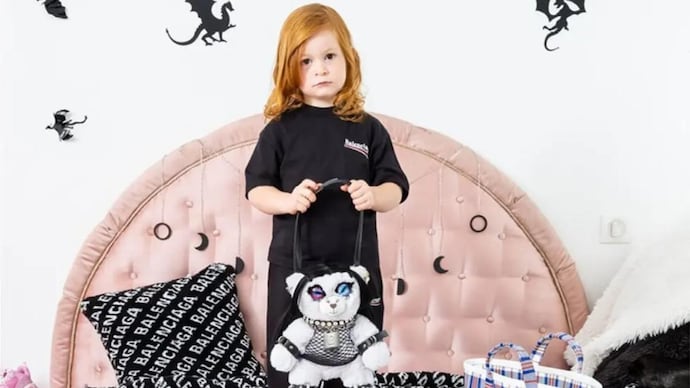
Demna’s career has not been without controversy. At Balenciaga, he faced criticism for campaigns and designs that some deemed insensitive or exploitative. More recently, ahead of his Gucci debut, the brand faced backlash for using AI-generated images in its “Primavera” campaign. Critics described the images as “AI slop,” raising concerns about the role of artificial intelligence in creative industries.
However, Demna’s willingness to court controversy is arguably integral to his creative identity. As the model and influencer Vivian Wilson observed, “He has this complete I-don’t-give-a-fuck-ness about what he does, and he knows how to garner attention, how to make a moment”.
Impact on the Fashion Industry
Demna’s influence on contemporary fashion is difficult to overstate. Fashion historian Alexandre Samson has called him “the most influential designer of the decade”. His impact can be seen across multiple dimensions:
Silhouette and Proportion
The oversized, deconstructed silhouettes Demna popularized at Vetements and Balenciaga have become ubiquitous in both luxury and fast fashion.
Streetwear and Luxury
His work helped legitimize streetwear as a luxury category, paving the way for collaborations between high fashion houses and streetwear brands.
Digital and Viral Fashion
Demna understood early how to create products that would generate social media engagement, from the “Ikea” bag to the Triple S sneaker.
Sustainable Fashion Discourse
His emphasis on “real clothes” and utilitarian design has contributed to broader conversations about sustainability and waste in fashion.
Read More: Jean Paul Gaultier: The Iconic Designer, His Signature Designs, and the Brand’s Bold New Era
Frequently Asked Questions
Who is Demna Gvasalia?
Demna Gvasalia is a Georgian-born fashion designer, currently the artistic director of Gucci. He previously led Balenciaga for a decade and founded the label Vetements in 2014. He is known for his oversized silhouettes, streetwear-infused luxury, and provocative designs.
What is Demna Gvasalia known for?
Demna Gvasalia is known for redefining modern luxury through oversized silhouettes, deconstructive patternmaking, and viral accessories like the Balenciaga Triple S sneaker and the “Ikea” bag. He is also recognized for his decade-long tenure at Balenciaga and his current role at Gucci.
When did Demna Gvasalia become creative director of Gucci?
Demna Gvasalia was appointed artistic director of Gucci in March 2025, effective July 2025. He presented his first runway collection for the house, Primavera, in February 2026.
What is Demna Gvasalia’s net worth?
Demna Gvasalia’s net worth was estimated at approximately $50 million in 2023, according to Investor Times.
What awards has Demna Gvasalia won?
Demna Gvasalia has received the Chevalier de l’Ordre des Arts et des Lettres (2025), the CFDA Award, and the British Fashion Council’s Accessories Designer of the Year award, among other honors.
What is Demna Gvasalia’s design philosophy?
Demna Gvasalia’s design philosophy centers on challenging conventional notions of luxury and taste, creating emotional connections through fashion, and blending streetwear with high fashion. He emphasizes realism and utilitarianism while maintaining a provocative edge.
Future Outlook
As Demna Gvasalia continues his tenure at Gucci, the fashion world watches closely. His mandate is clear: restore the brand’s commercial performance while maintaining its cultural relevance. The early signs—from the critical reception of Primavera to the industry’s renewed attention on Gucci—are promising.
However, the ultimate measure of success will be sales. Gucci’s revenue decline has been steep, and Demna’s ability to translate creative vision into commercial results will determine whether his appointment is deemed a success. What is certain is that Demna Gvasalia will continue to provoke, challenge, and redefine what luxury fashion means in the 21st century.
Conclusion
Demna Gvasalia stands at the intersection of fashion’s past and future. From his formative years in Soviet Georgia to his rise through the ranks of Maison Margiela and Louis Vuitton, from the revolutionary impact of Vetements to his decade-long transformation of Balenciaga, and now to his pivotal role at Gucci, Demna Gvasalia has consistently demonstrated a rare combination of technical skill, cultural intuition, and creative fearlessness.
For those seeking to understand where fashion is heading, Demna Gvasalia offers a compelling—if sometimes uncomfortable—preview. His work asks difficult questions about value, beauty, and meaning in an era of mass consumption and digital spectacle. Whether his Gucci chapter ultimately succeeds commercially or not, his influence on the industry is already indelible. Demna Gvasalia is not merely a designer; he is a force that has reshaped how we think about what we wear and why it matters.